
Starter batteries and chargers
A generator that starts cleanly after standing for days or weeks usually comes down to the battery, the charger and the condition of the starting circuit. We supply replacement starter batteries, float chargers and related charging parts for small portable units and larger standby sets.
Keeping the starting system ready
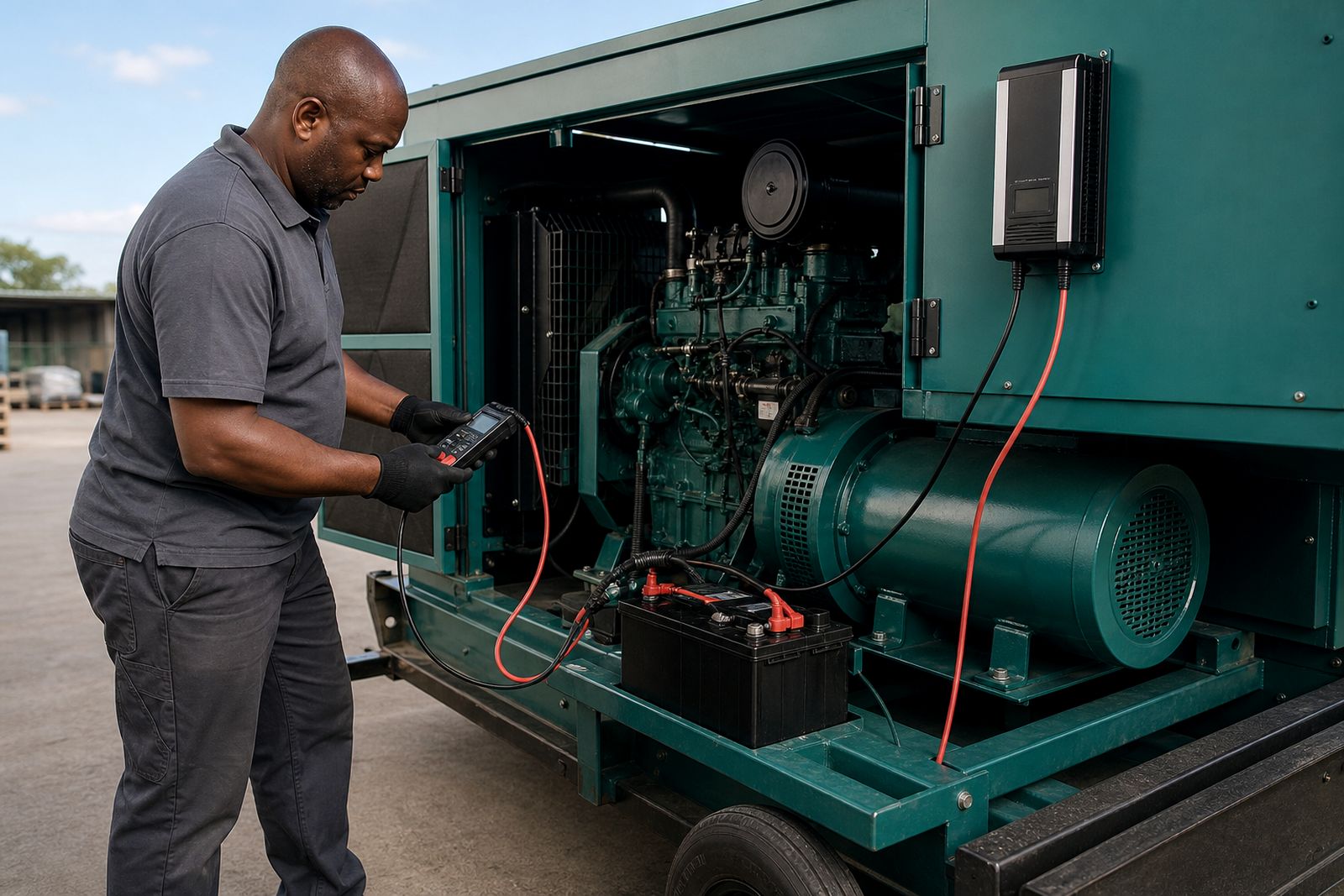
Starter batteries and chargers keep enough stored power on the set for the engine to crank at the speed the starter motor needs. On standby machines this matters most after long idle periods, while on farm, workshop and site generators it matters after repeated stop start use, vibration and heat. A weak battery can look like a fuel or control fault, so it helps to check the whole starting side before replacing parts.
We can assist with replacement batteries, maintenance chargers, battery leads, terminals and charging items linked to the set's own system. For matching we normally work from the generator nameplate, the battery label, overall battery dimensions and clear photos of the tray, cable layout and charger label if fitted.
- Starter batteries for petrol and diesel generators
- Float and maintenance chargers for standby sets
- Battery terminals, leads and charging accessories
- Replacement parts for common 12 V and 24 V starting systems
Battery sizes, voltages and charger choices
Most small generators use a single 12 V battery, while larger standby sets may use a heavier 12 V unit or a 24 V arrangement made up of two matched batteries. Physical size is just as important as voltage because tray length, width, hold down style and terminal position vary. Cold cranking ability must suit the engine size and the condition of the starter circuit, especially on diesel units that stand outside in winter mornings.
Chargers also need to match the battery chemistry and the set layout. A maintenance charger is meant to hold a healthy battery at the correct level while the generator waits on standby, not to recover a badly sulphated battery in one go. On some sets the charger works with the controller and mains powered panel, so the input supply, charger output and fuse protection all need to be checked properley before a replacement is chosen.
- 12 V batteries for compact petrol and diesel generators
- 24 V battery sets for larger engines using two matched batteries
- Low amp maintenance chargers for float duty
- Heavier charger options where the panel and battery bank require it
- Left hand or right hand terminal orientation where tray access is tight
Where these parts suit, and where they do not
Battery and charger replacements suit generators that already have an electric start system and need reliable cranking after storage or scheduled standby use. They are commonly fitted on home backup units, farm pump sets, workshop generators and business standby machines where a controller monitors mains failure and starts the engine automatically. In coastal air, battery posts and lugs often corrode faster, and charger terminals inside the control panel may need cleaning or replacement at the same time.
These parts do not convert a recoil start machine into electric start, and they do not solve charging faults caused by damaged alternator windings, failed starter motors or incorrect wiring. We do not sell complete generators, and we do not do electrical installation. Any mains connected charger supply, panel wiring, changeover work or starting circuit modifications must be done by a qualified electrician or generator technician.
Site and installation points that matter
Before ordering, check the battery tray size, the clamp or hold down method, cable reach and the available ventilation around the battery area. Some canopies have little clearance above the battery, which means terminal height and the route of the positive lead matter more than people expect. Charger mounting also needs a dry position with sensible airflow and protection from direct exhaust heat.
If the set has an auto start controller, tell us whether the charger feeds the battery directly or through the panel. It also helps to note whether the unit is stored indoors, in a hot plant room, or on a farm where dust and vibration are part of daily use. That small bit of site detail often prevents the wrong part being sent out.
- Battery tray length, width and height available
- Voltage of the starting system, 12 V or 24 V
- Terminal layout and cable polarity
- Charger input supply and output rating
- Indoor, outdoor, coastal or high dust operating conditions
Care between services
A starter battery lasts longer when the generator's own charging circuit works properly and the battery is kept clean, clamped down and fully charged while on standby. Loose terminals create resistance and heat, and repeated deep discharge shortens battery life. If the set struggles to crank after standing, check battery voltage at rest, terminal condition, earth lead tightness and whether the charger is actually holding charge with mains present.
For sets that run only during power cuts or testing, a scheduled visual check helps more than people think. Look for swelling, acid residue, green corrosion on lugs and charger fault lights. If the battery top is dirty or damp, clean it with the machine isolated and keep metal tools clear of the posts. On twin battery 24 V systems, replace with a matched pair rather than mixing an old battery with a new one.
What to send with your enquiry
To identify the right battery or charger, send the generator make shown on the nameplate, the model, the engine type if visible and photos of the existing battery, its label and the battery bay. A picture of the charger label, controller screen or panel wiring sticker is useful where auto start equipment is involved. We courier parts from Wadeville to all provinces, and clear photos save a lot of guessing.
Please include any starting symptoms as well, such as slow crank, clicking solenoid, no charge light, charger alarm or a battery that goes flat after standing. If you know the battery dimensions and terminal orientation, add those too. You can send the details through our contact form.
- Nameplate photo of the generator or engine
- Photo of the current battery label and tray
- Battery dimensions in millimetres
- System voltage and whether it is 12 V or 24 V
- Photo of charger label or controller panel if fitted
- Brief note on the fault or usage pattern
What our Generator Parts customers say
Verified Google reviews
Questions we get asked
Can I fit any 12 V battery that fits in the tray?
No. The battery must match the generator's starting voltage, terminal layout and cranking requirement. Physical fit alone is not enough, especially on diesel sets that need higher cranking current.
My generator has a charger but the battery still goes flat. Is the battery definitely faulty?
Not always. The problem can also be a failed charger, poor earth, corroded terminals, a parasitic drain or a charging circuit fault on the set. Photos and a few basic voltage readings help narrow it down.
Do you install batteries, chargers or changeover wiring?
We supply the parts only. Any charger supply wiring, panel work or changeover related electrical work must be done by a qualified electrician or generator technician.
Also worth a look
Tell us about the job
Send sizes, materials and where you are through our contact form, and we will come back with the practical options.
Open the contact form