Automatic voltage regulators
An automatic voltage regulator controls the alternator output so connected equipment sees a steady voltage while the engine speed and load move around. This page covers the AVR types we supply, the details that matter when matching a replacement, and the common signs that point to regulator trouble.
What an AVR does on a generator
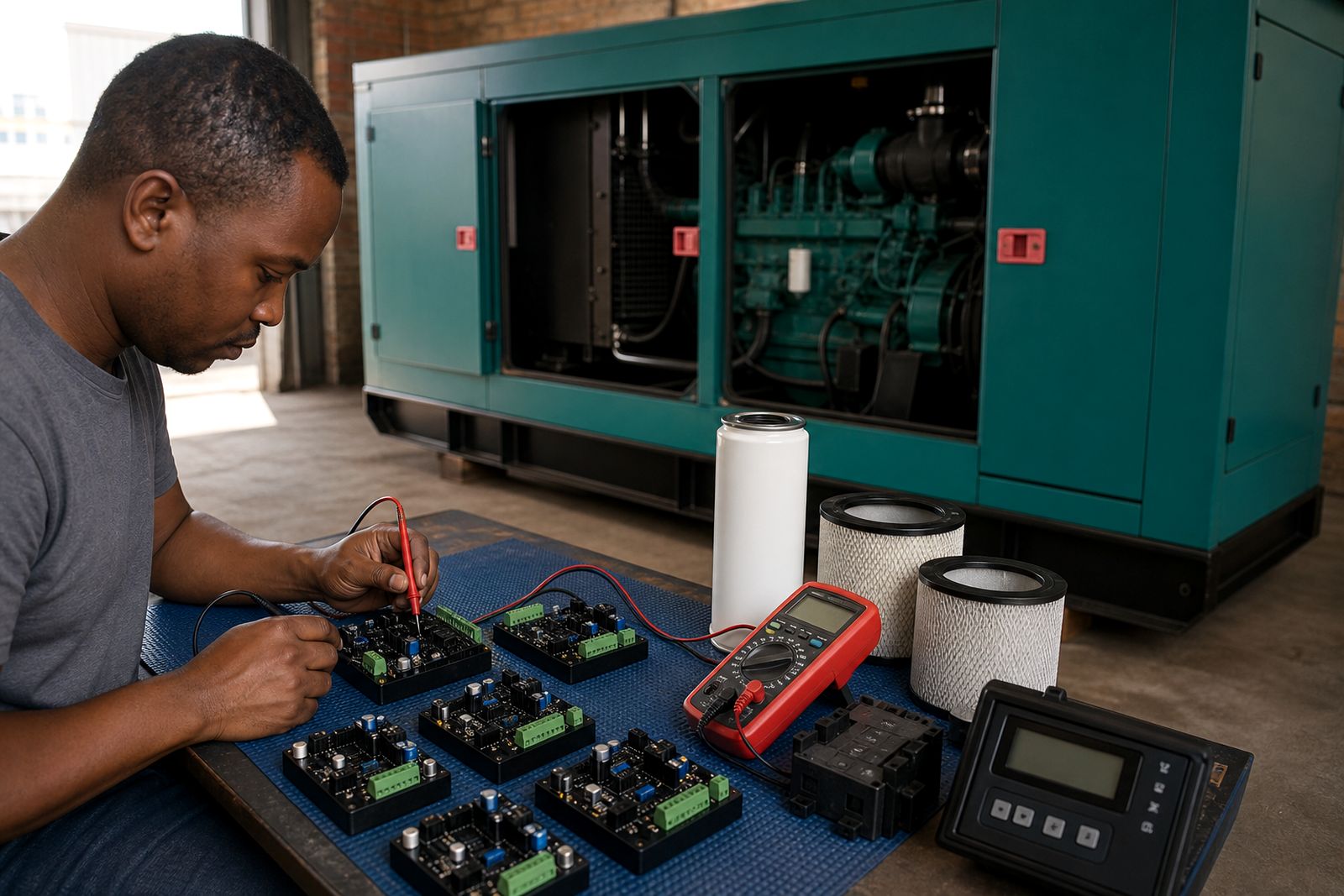
On a brushless generator, the AVR monitors output voltage and adjusts excitation to keep the alternator within its intended range. When the regulator is the correct type and set properly, lights stop dipping as badly under changing load and motors start with less fuss, although the engine and governor still need to be in good order.
A failed or mismatched AVR can show up as low voltage, high voltage, hunting output, no build-up after starting, or a unit that runs but will not carry normal load. Some faults that look like an AVR issue are actually worn brushes on other designs, damaged sensing leads, a failed rotating diode pack, poor engine speed control or moisture in the alternator after standing in a damp coastal area.
The main AVR types in this section
Not every regulator suits every alternator. The physical size, plug layout, sensing arrangement and excitation circuit all need to line up with the alternator it is meant to control.
- Brushless alternator AVRs for standby sets and larger site units.
- Compact AVRs used on smaller petrol and diesel generators.
- Regulators with different sensing inputs, such as single-phase and three-phase variants.
- Units with trim functions for voltage stability, under-frequency protection or droop features on certain applications.
If you are replacing like for like, clear photos of the old part front and back usually narrow things down quickly. Where the old regulator is missing or badly burnt, the alternator nameplate and terminal markings become more important.
How to match a replacement properly
The best matches come from a combination of nameplate details and photos, not from generator colour or frame shape. A portable set sold under one name can carry a different alternator section from the next batch, so the part needs to be checked against what is actually fitted.
- Photograph the generator and the alternator nameplate clearly.
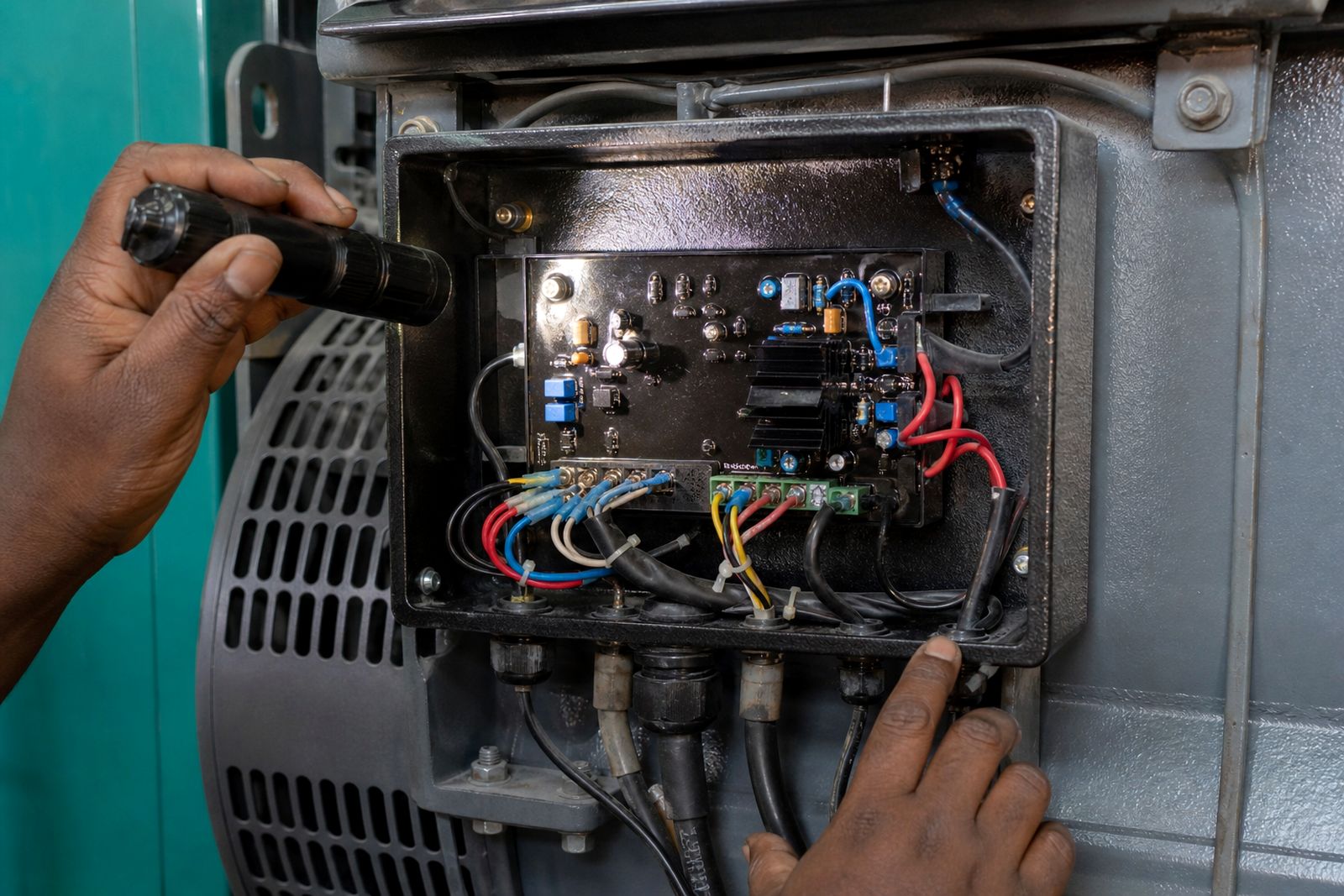
- Take close photos of the existing AVR, including all terminals, plugs and adjustment pots.
- Note whether the set is single-phase or three-phase.
- Include the generator kVA rating and engine speed if shown.
- Show any wiring labels on the harness and terminal strip.
- Mention the fault symptoms, especially over-voltage, no output or unstable voltage.
If the regulator has burnt tracks or the label is unreadable, send extra pictures of the mounting points and the connected wires before anything is moved. That often helps prevent a near match that looks right in the hand but is wrong once fitted.
A practical comparison before you order
These points help separate AVRs that may look similar on the bench.
- Connector style: loose spade terminals and moulded plugs are not interchangeable without proper circuit matching.
- Sensing voltage: a regulator intended for one sensing range can behave badly on another.
- Excitation output: undersized output may give weak build-up, while the wrong control circuit can over-excite the field.
- Mounting footprint: hole spacing and heat-sink position matter inside compact end covers.
- Frequency protection: some AVRs reduce voltage when engine speed drops, which protects equipment but can confuse fault finding if the engine is hunting.
- Phase arrangement: a single-phase AVR cannot simply be fitted onto a three-phase alternator because the sensing and regulation method differ.
Where two regulators share a similar shape, wiring order and terminal labelling still need checking one by one. A quick visual guess can get expensive, and on electrical parts it is beter to pause before fitting the wrong unit.
Common fault signs linked to the AVR
Voltage faults are not always constant. A generator may start normally in the morning, then drift once it warms up, or only misbehave when a pump, compressor or cold-room load cuts in. Those patterns can help point to the regulator, the sensing circuit or another alternator component.
Typical AVR-related complaints include no output after starting, voltage climbing too high, dim lights that pulse under steady load, and output that appears normal with no load but falls away sharply once equipment is connected. Burn marks, cracked resin, loose terminals and corroded connectors are all worth noting when you send pictures through our contact form.
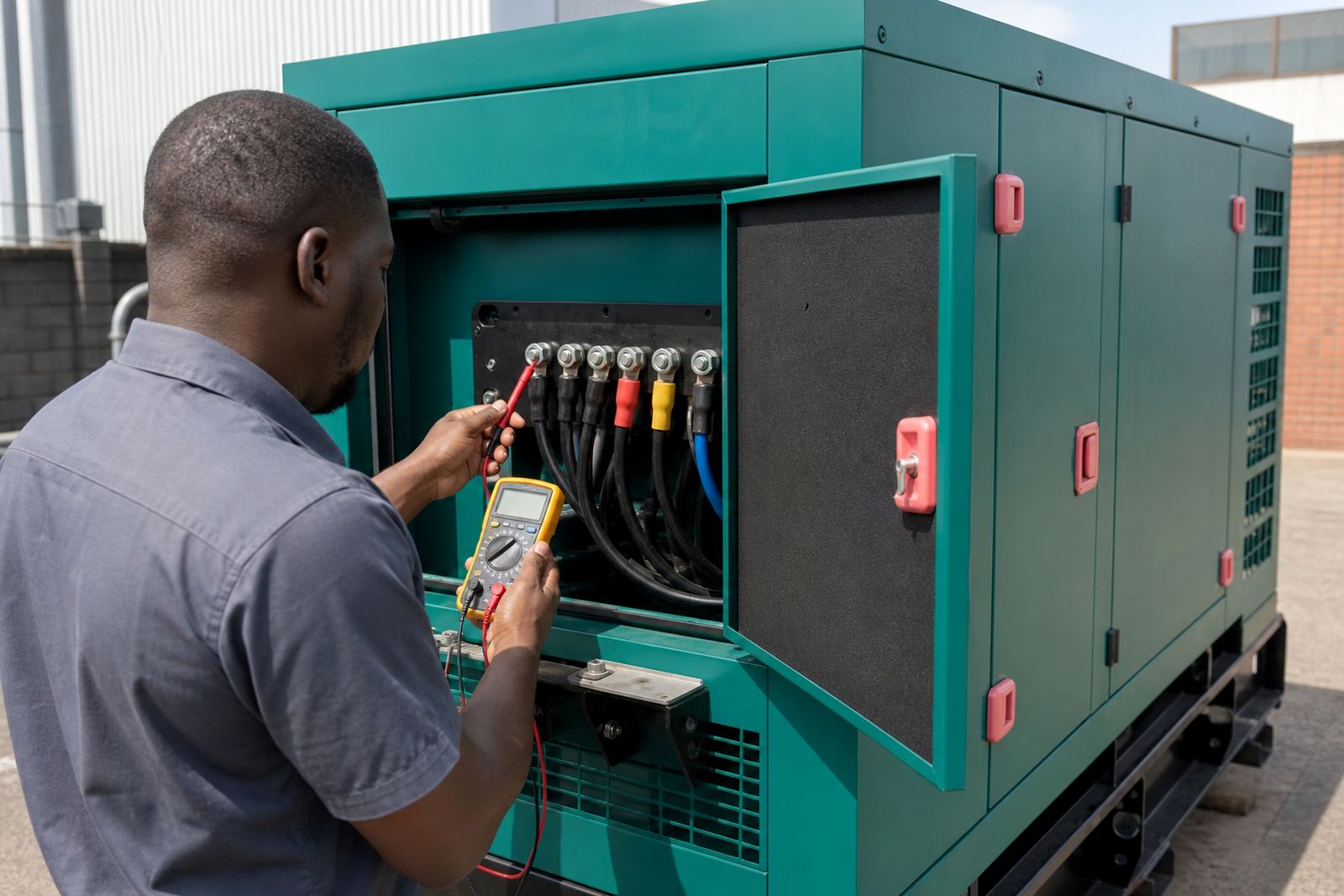
If wiring or changeover equipment is involved, a qualified electrician should handle testing and any changes on site. We supply the parts and help identify them, but we do not do installation work.
Parts often ordered with an AVR
A regulator change is often done during a wider service, especially on standby sets that only show problems when called on during a power cut. Looking at the support parts at the same time can save a second strip-down later.
- Sensors and senders where shutdown or alarm signals are also acting up.
- Filters and service kits for units with irregular running or overdue maintenance.
- Starter batteries and chargers on auto-start sets that struggle to crank reliably.
- Controller and auto-start parts where mains failure starting logic is part of the complaint.
If you are not sure whether the fault sits with the AVR or the control side, send the full set of photos rather than only the regulator. A wider view of the terminal box and controller area often changes the diagnosis.
What our Generator Parts customers say
Verified Google reviews
Questions we get asked
Can I match an AVR from the generator model alone?
Sometimes, but not reliably enough on its own. The safer route is the alternator nameplate plus clear photos of the existing regulator, wiring and terminals.
Do you supply complete generators or install changeover wiring?
No. We supply generator spare parts only. We do not sell or hire complete generators, and wiring or changeover work must be done by a qualified electrician.
What should I send for help identifying the right AVR?
Send photos of the alternator nameplate, the AVR front and back, the plug or terminals, and a short note on the fault symptoms through our contact form.
Tell us about the job
Send sizes, materials and where you are through our contact form, and we will come back with the practical options.
Open the contact form