Oil and fuel filters
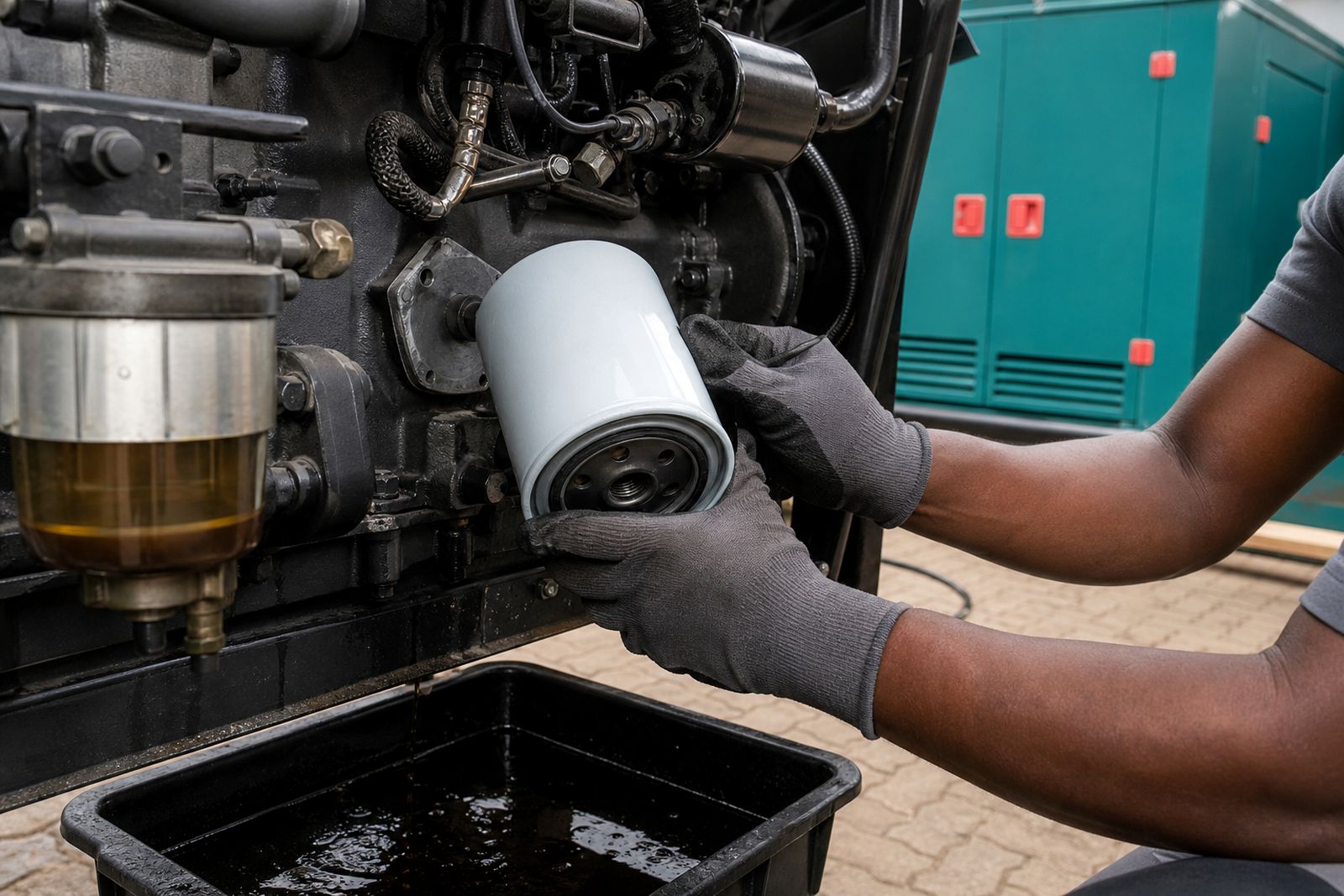
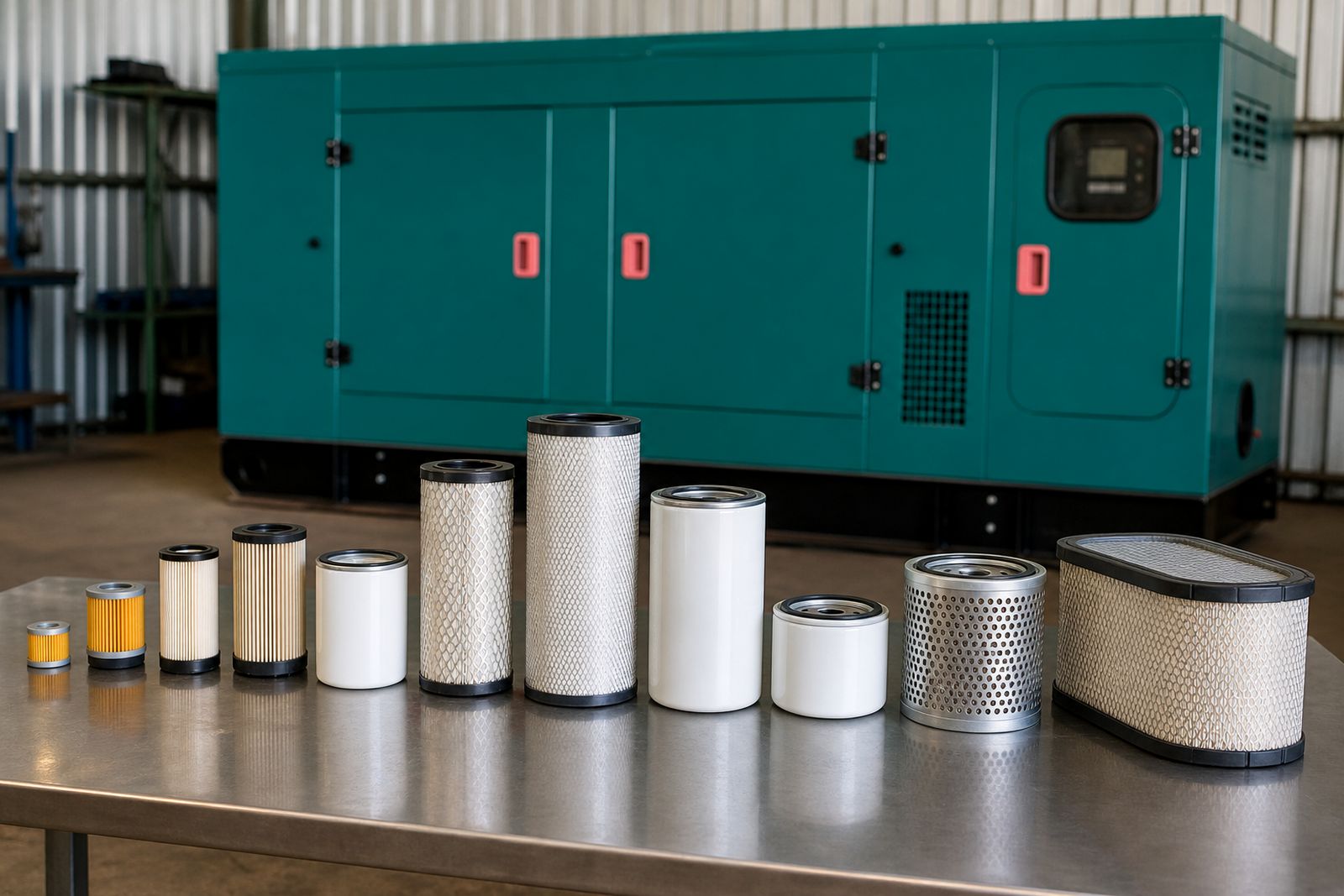
Oil and fuel filters protect a generator engine from abrasive dirt, rust flakes, water carry-over and degraded fuel residue. We help match spin-on and cartridge elements for small portable units and larger standby sets from the generator nameplate, engine details and clear photos.
What these filters do on a generator set
On a generator engine, the oil filter traps soot, metal particles and sludge before they recirculate through bearings and galleries. The fuel filter deals with dirt from drums, ageing tanks and contaminated forecourts, while some assemblies also separate free water before it reaches the injection side or carburettor feed.
Most failures linked to filters are not dramatic at first. An engine may start, carry load and sound normal, then show rising wear, harder cold starts, uneven running or low fuel delivery a few weeks later. A correct filter keeps service intervals sensible and helps the engine stay clean inside, which matters on standby sets that sit for long periods between runs.
- Oil filters are supplied in spin-on canister and cartridge element styles.
- Fuel filters cover in-line types, canister elements and water-separator elements.
- Applications include diesel and petrol generator engines across portable and standby sizes.
Filter types, sizes and working limits
Spin-on filters are the common sealed canister type with an internal medium, centre thread and gasket face. Cartridge filters fit into a housing and rely on the cap, seals and centre tube dimensions being correct. Fuel filters vary more widely, with differences in thread size, bowl fitment, element height, outer diameter and whether a water drain or sensor port is part of the assembly.
Working limits matter because a filter that looks close can still be wrong. Oil filters must match the gasket diameter, thread pitch, bypass arrangement where applicable and the available clearance around the mounting face. Fuel filters must suit the engine feed system, expected flow, micron range and the housing style already fitted. A filter that is too restrictive may starve the engine under load, while one with the wrong seal can draw air into the line and make priming a nuisance.
- Common oil filter body diameters fall within compact, medium and heavy canister sizes.
- Fuel element lengths and bowl depths differ, especially on water-separator assemblies.
- Micron ratings vary by duty, from coarse pre-filtration to fine final filtration.
- Thread size, seal diameter and overall height must be checked, not guessed.
Where oil and fuel filters suit the job
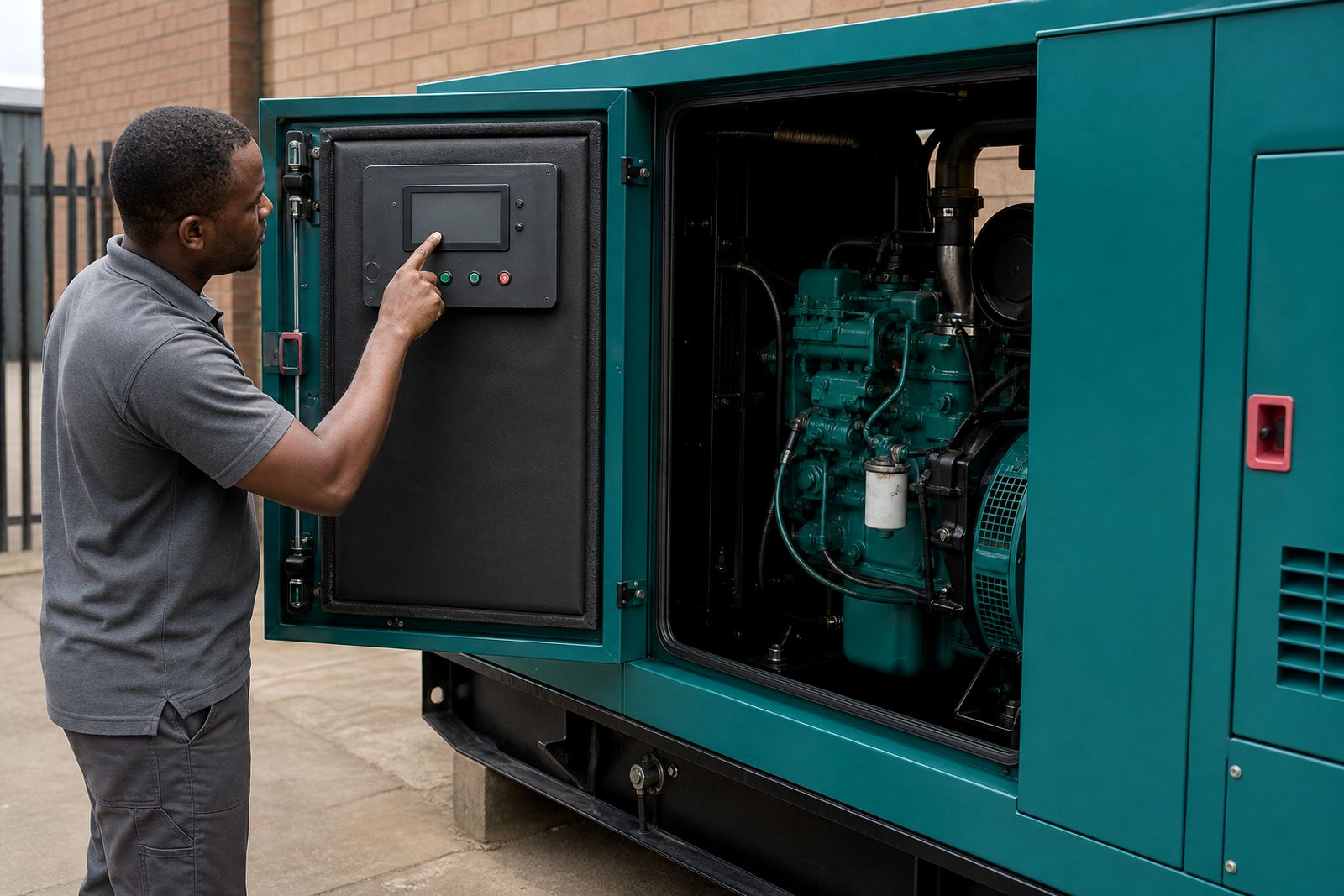
These filters suit routine servicing on home backup units, borehole generators, workshop sets and standby machines at small business premises. They are especially useful where fuel quality is inconsistent, tanks are filled from cans, or a machine stands idle for long periods and then has to carry a proper load during a power cut.
Oil and fuel filters are not a cure for every running problem. If the engine has severe blow-by, damaged injectors, a failing lift pump, blocked breather system or heavy sludge from missed services, a fresh filter on its own will not put that right. Likewise, where a tank has widespread contamination or water ingress, the tank and lines need attention as well otherwise the new element clogs too soon.
In coastal areas and humid storage rooms, condensation in fuel systems is more common than many owners expect. That makes water-separator servicing more important on diesel units kept near the coast or on farms where tanks breathe through warm days and cool nights.
Fitment notes and service care
Filter replacement should be done with the engine off and cool enough to work on safely. The mounting face must be wiped clean, the old gasket confirmed removed and the new seal lightly lubricated with clean oil or diesel where appropriate. Overtightening can distort the seal or make later removal miserable, while undertightening risks leaks once oil pressure or fuel pressure rises.
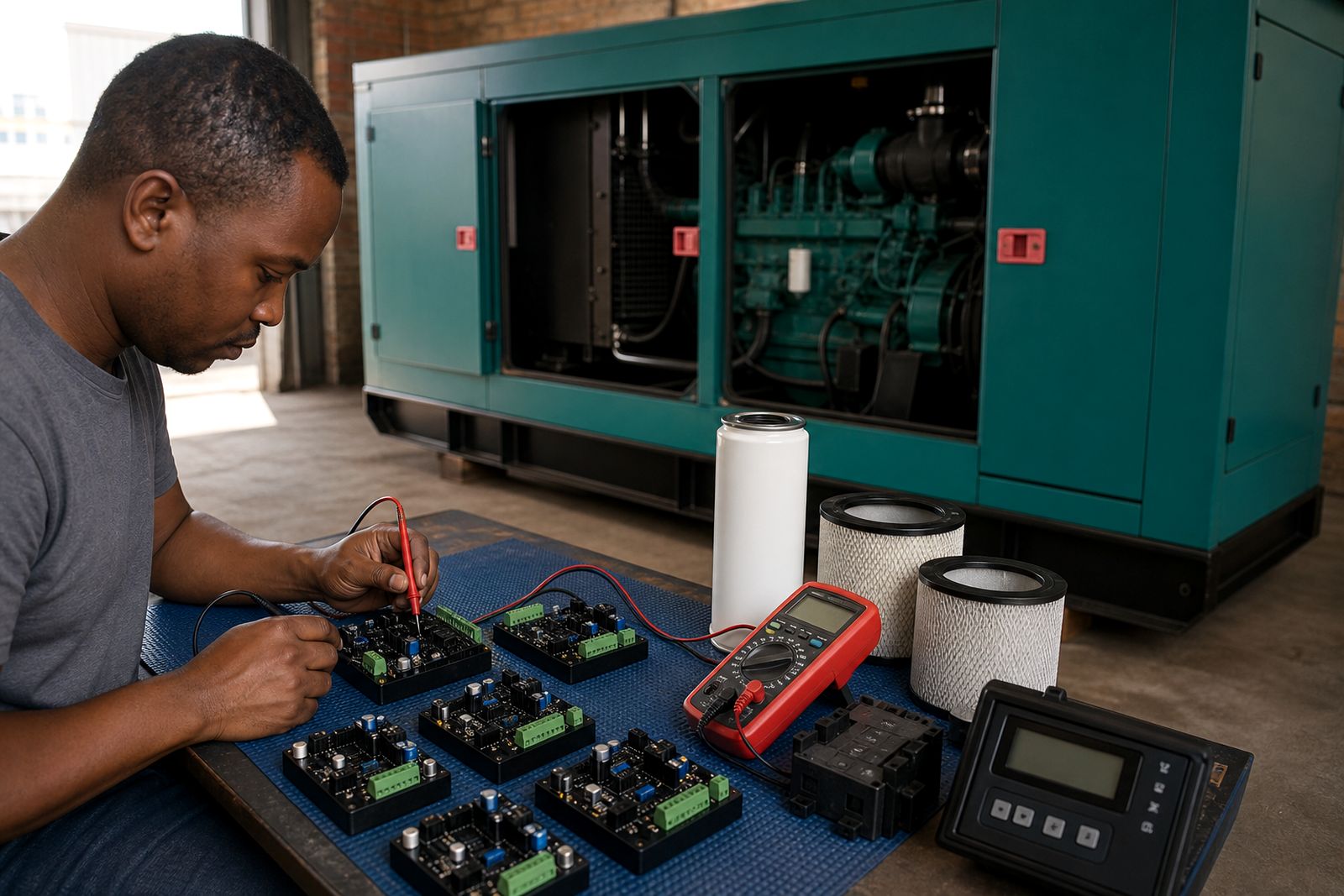
After a fuel filter change, some engines need manual priming before they will start cleanly. Cranking a diesel dry for too long is hard on the starter battery and can leave the owner thinking the part is wrong when the system simply still has air trapped in it. If the generator sits in a changeover installation, any electrical testing around start signals and shutdown circuits should be handled by a qualified electrician.
- Replace sealing rings supplied with cartridge elements where the housing requires them.
- Check for old gasket double-stacking on spin-on oil filters.
- Drain free water from separator bowls if that housing type is fitted.
- Run the engine and inspect for leaks after service, then recheck once warm.
Matching the right filter from photos and plate details
A part number from the existing filter is helpful, but it is not the only route to a correct match. Many generator owners send the alternator plate and overlook the engine plate, yet the engine details usually matter most for oil and fuel filtration. Clear pictures save a lot of back and forth, particularly when an old canister has been painted over or the printing has faded.
When you send an enquiry through our contact form, include as much of the following as you can. Good information usually narrows the options fast, and it helps avoid ordering a filter that clears the thread but fouls the mounting bracket.
- Generator make and model shown on the nameplate.
- Engine model and serial details, if readable.
- Fuel type, petrol or diesel.
- Photos of the installed filter, mounting face and surrounding space.
- Overall filter height, outer diameter and thread size if measured.
- Whether the fuel assembly includes a water bowl, drain or sensor.
- Any service kit numbers found in the manual or on the old packaging.
What we can supply with these filters
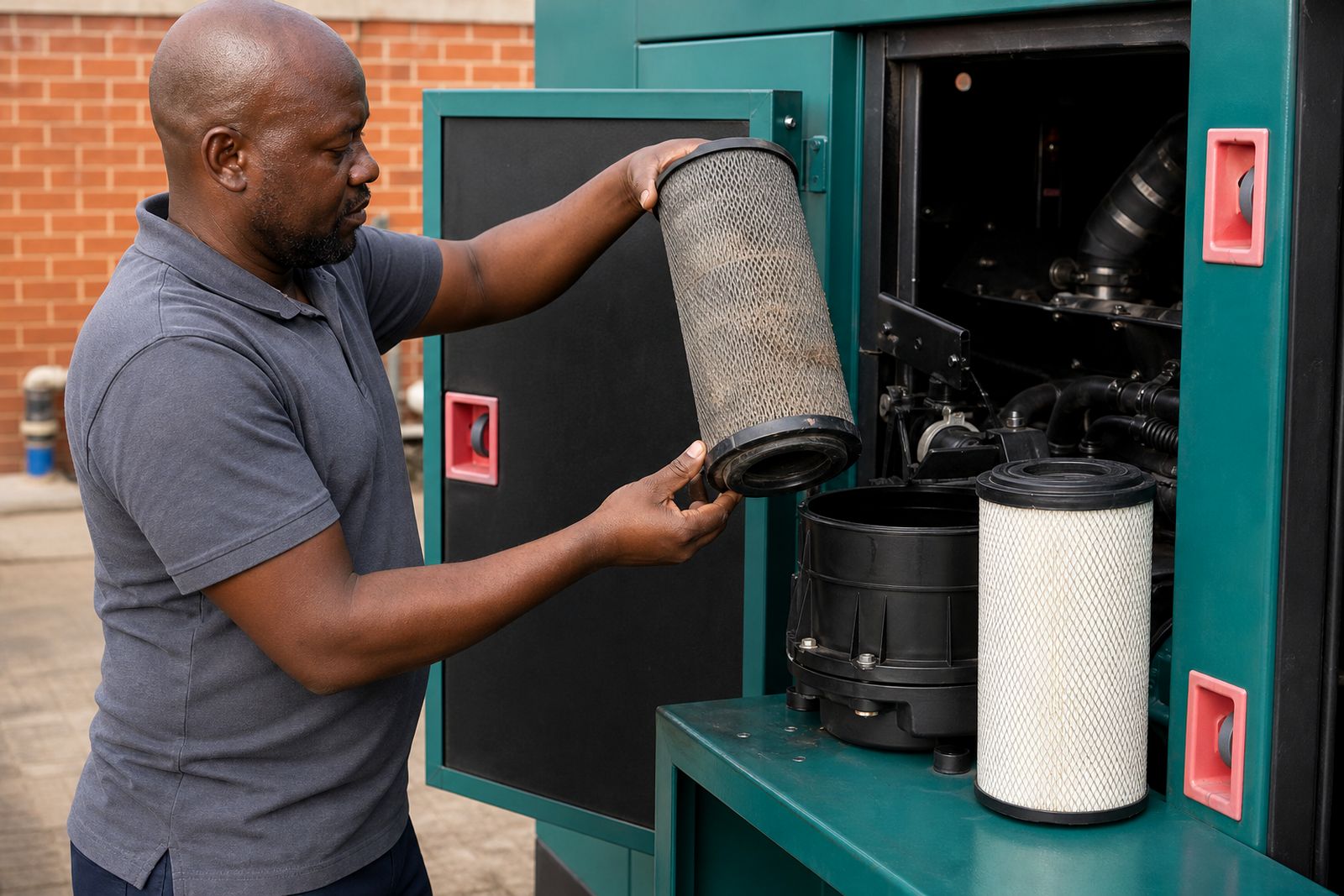
Oil and fuel filters are often ordered together with other routine service parts so the generator can be attended to in one session. That may include air filtration items, water-separator elements, belts, sensors, chargers and starter battery support parts depending on the machine. We can also help where the owner suspects a fuel starvation issue and wants to compare the existing setup against the correct filter arrangement.
We do not sell complete generators, and we do not carry out electrical installation work. For changeover wiring, auto-start circuits and any mains-related work around a standby set, use a qualified electrician. Our role here is to identify the correct spares and get the right filter type moving to your town whether the unit is in Wadeville, a Free State workshop or a farm in Limpopo, and a wrong photo or missing measurement can derail that more than people think.
What our Generator Parts customers say
Verified Google reviews
Questions we get asked
Can I match a filter only from the generator model?
Sometimes, but engine details and photos usually make the match more reliable. Different engine variants can be fitted under one generator model range, and the old filter dimensions still need checking.
Do you only handle diesel fuel filters?
No. We supply oil and fuel filters for both diesel and petrol generator engines, from small portable machines to larger standby units.
Will a new fuel filter fix poor running on its own?
Not always. A blocked element can cause rough running or power loss, but tank contamination, air leaks, weak pumps or injector faults may still need attention after the filter is changed.
Also worth a look
Tell us about the job
Send sizes, materials and where you are through our contact form, and we will come back with the practical options.
Open the contact form