

A simple generator maintenance schedule
A generator lasts longer when small checks are done before dirt, weak starting or charging faults turn into a shutdown. This guide sets out a practical routine for home, farm and business sets, from portable units to larger standby machines.
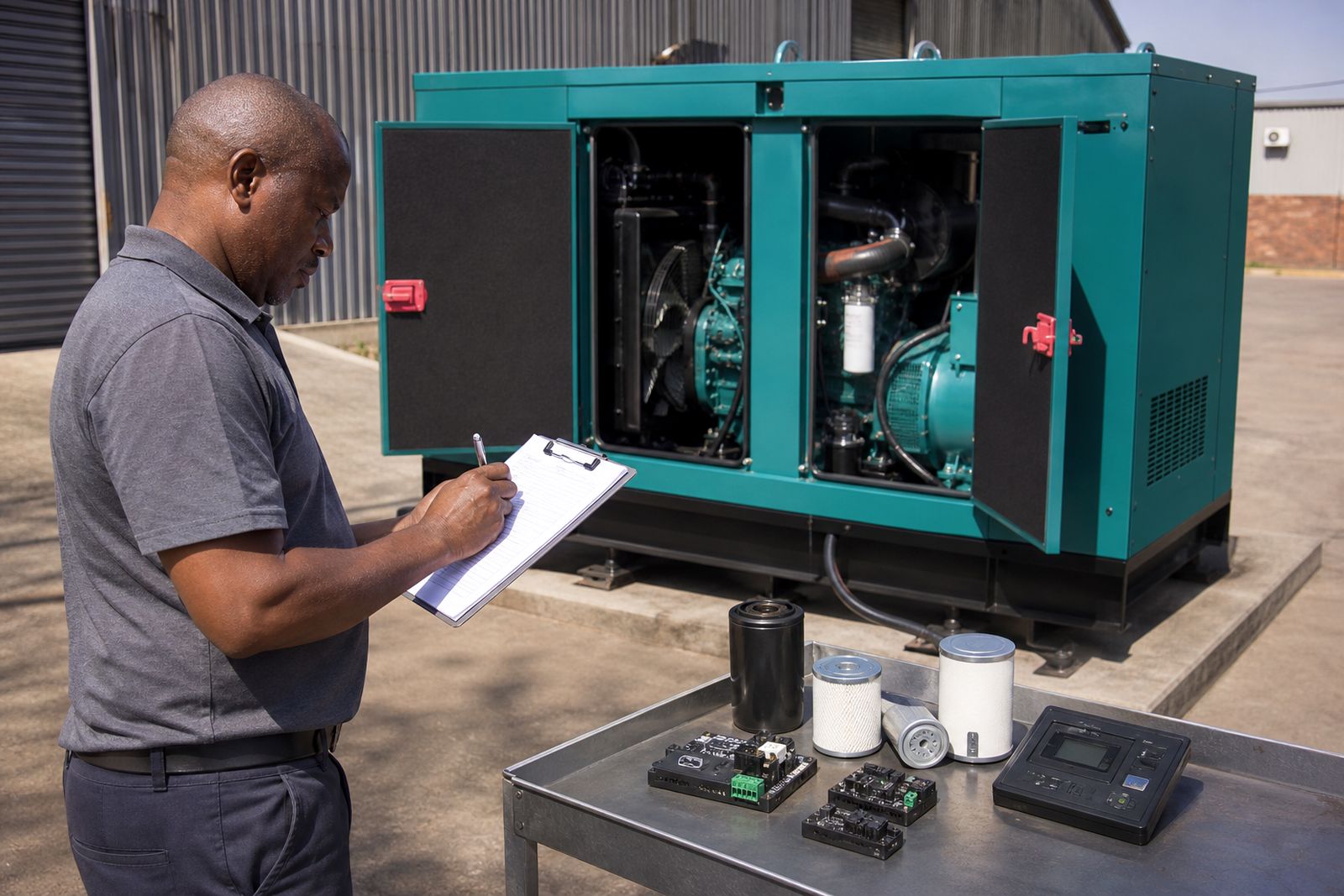
Start with a written service record
Before touching the machine, keep one notebook or printed sheet with the generator model, engine model, alternator details, battery size, filter references and the hour reading. A record matters because many faults only make sense when you can see what changed between one visit and the next, especially on standby sets that run for short test periods and then sit for weeks.
Write down each inspection date, running hours, parts fitted and any unusual signs such as harder starting, black smoke, hunting speed, battery swelling or warning lights. Photos of the nameplate, controller screen and the old part are useful when you need help identifying replacements.
- Record the hour meter reading at every check.
- Note the filter and belt part numbers actually fitted.
- Keep battery replacement dates on the same page.
- Mark whether the set is petrol or diesel, air cooled or liquid cooled.
- Store photos of the controller, AVR and sensors with the service record.
Weekly checks for standby and frequently used sets
A weekly look-around takes a few minutes and often catches the problems that stop a generator when mains power drops. On farm and workshop units, dust and vibration can loosen clamps and shorten filter life, so a quick inspection should be done even if the engine has not run much.
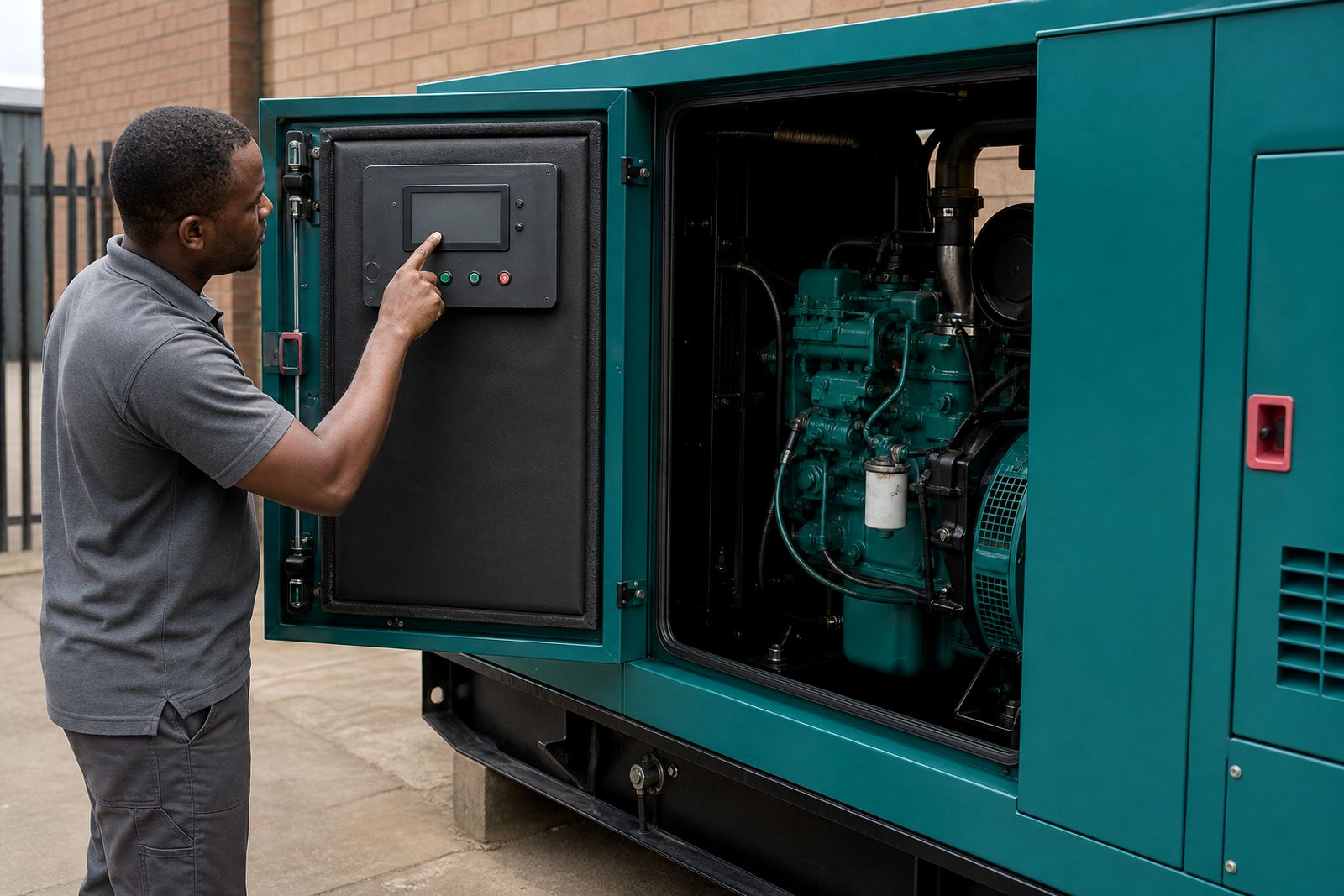
Check for oil drips, diesel seepage, cracked hoses, loose battery terminals and anything rubbing against the fan belt. If the set has an auto-start function, confirm that the controller has no active alarm and that the battery charger is operating. Where a machine is kept near the coast, light corrosion on terminals and plugs can start earlier than expected, so dont ignore green or white build-up.
- Look at engine oil level and top up only with the correct grade.
- Check coolant level on liquid cooled units when the engine is cold.
- Inspect the air intake area for dust, grass, insects or plastic bags.
- Make sure the battery posts are clean and the hold-down is tight.
- Run the set briefly if your operating routine calls for a test start.
- Watch for warning lamps, unstable voltage display or unusual exhaust smoke.
If a standby machine exercises under load through a changeover arrangement, any wiring or changeover work must be handled by a qualified electrician. The owner check is visual and operational only.
Monthly running checks under real load
Once a month, do more than a glance. A generator that only idles for a minute in the yard can still have a weak battery, a blocked fuel filter or poor voltage control. The better check is a proper run long enough for temperatures to stabilise, with the machine carrying the kind of load it normally sees.
Listen for hunting speed, misfiring, belt squeal and vibration through the frame. Watch whether the output settles cleanly or wanders up and down. On sets with a controller, read any stored shutdown or pre-alarm history. A machine that starts well but then shows low voltage, no charge indication or erratic frequency may need attention to the AVR, sensing circuit or engine governing, not just a new filter.
- Run the generator until it is properly warm.
- Observe starting behaviour and cranking speed.
- Check charging voltage at the battery if you know how to test it safely.
- Look for water or dirt in separator bowls where fitted.
- Inspect the exhaust path for soot leaks or loose clamps.
- Confirm that controller readings are believable and steady.
Filters, belts and service kit items
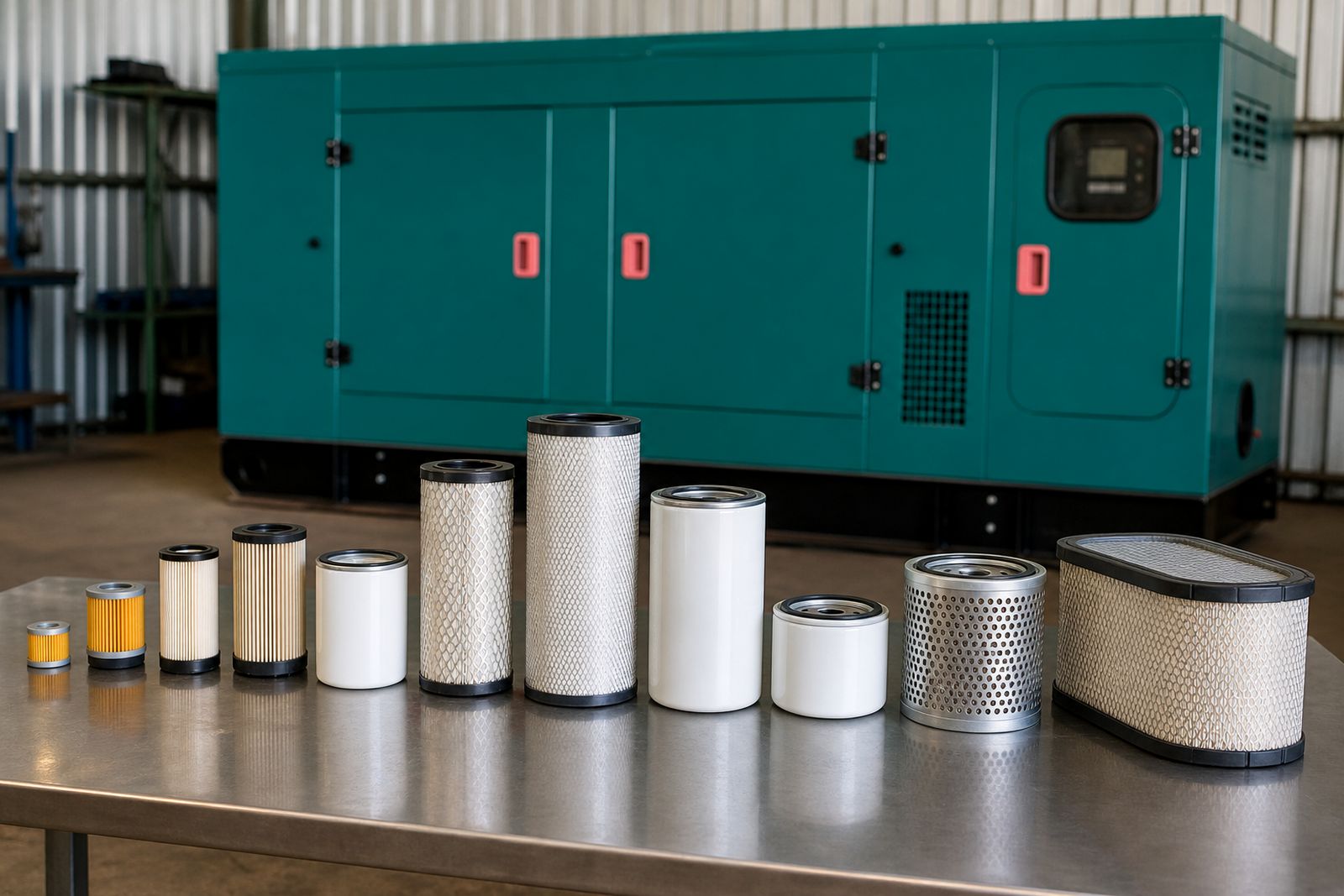
Most routine servicing comes back to consumable parts. Oil filters, fuel filters, air filters and water-separator elements protect the expensive parts of the engine, but only if they are replaced before restriction or contamination gets out of hand. A generator used in a dusty yard or on a farm can need air filtration attention much sooner than one in a clean plant room.
Belts should be checked for glazing, frayed edges, cracking across the ribs and polished sides. A belt that looks acceptable can still be too loose and slip when the set warms up. If your machine has a service kit option for the normal interval, keeping the kit together avoids the common problem where one filter gets changed and the rest are postponed.
Use the running hours in the owner literature where available, but shorten the interval if the unit works in dusty, hot or stop-start conditions. Dirty fuel from storage drums also changes the picture, and the water separator may need attention well before the main service is due.
At service interval: battery, AVR and controller checks
When the scheduled service is due, go past basic fluid and filter work. Battery condition needs more than a visual once-over. Check for swollen casing, loose posts, leaking caps on serviceable types and charger faults. Many no-start callouts begin with a battery that looked fine from a distance.
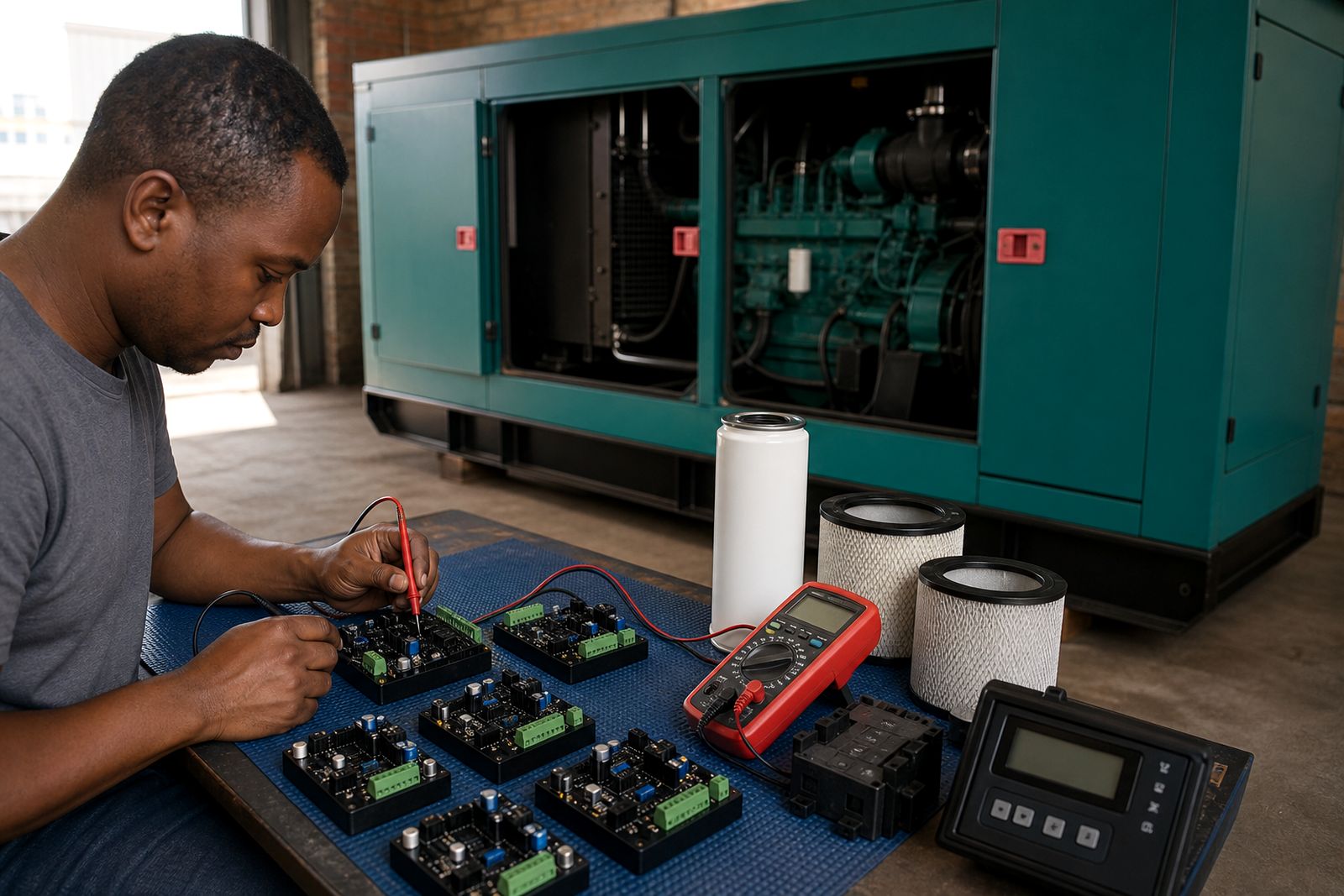
For the electrical side, inspect AVR connections, controller plugs, fuses, earth points and sensor wiring. Heat, vibration and moisture can work connectors loose or oxidise terminals over time. If the generator has unstable output, over-voltage alarms, poor build-up or repeated shutdown warnings, take clear photos of the module labels, wiring plugs and display messages before replacing parts. That makes identification more accurate and can save buying the wrong item.
- Replace service kit items due for the hour interval.
- Inspect battery charger output and cable condition.
- Check sensors for oil pressure and coolant temperature leaks or damaged plugs.
- Look over AVR terminals for burning, looseness or moisture marks.
- Read fault memory on the controller where that function is available.
- Replace worn belts before they fail under load.
When to stop and order the right parts
Do not keep running a generator that shows metal in the oil, severe fuel leaks, repeated over-speed alarms, burnt wiring smell or a charging system that is clearly not working. Small signs can turn into rotor damage, injector trouble or a battery failure that leaves the set dead when you need it most.
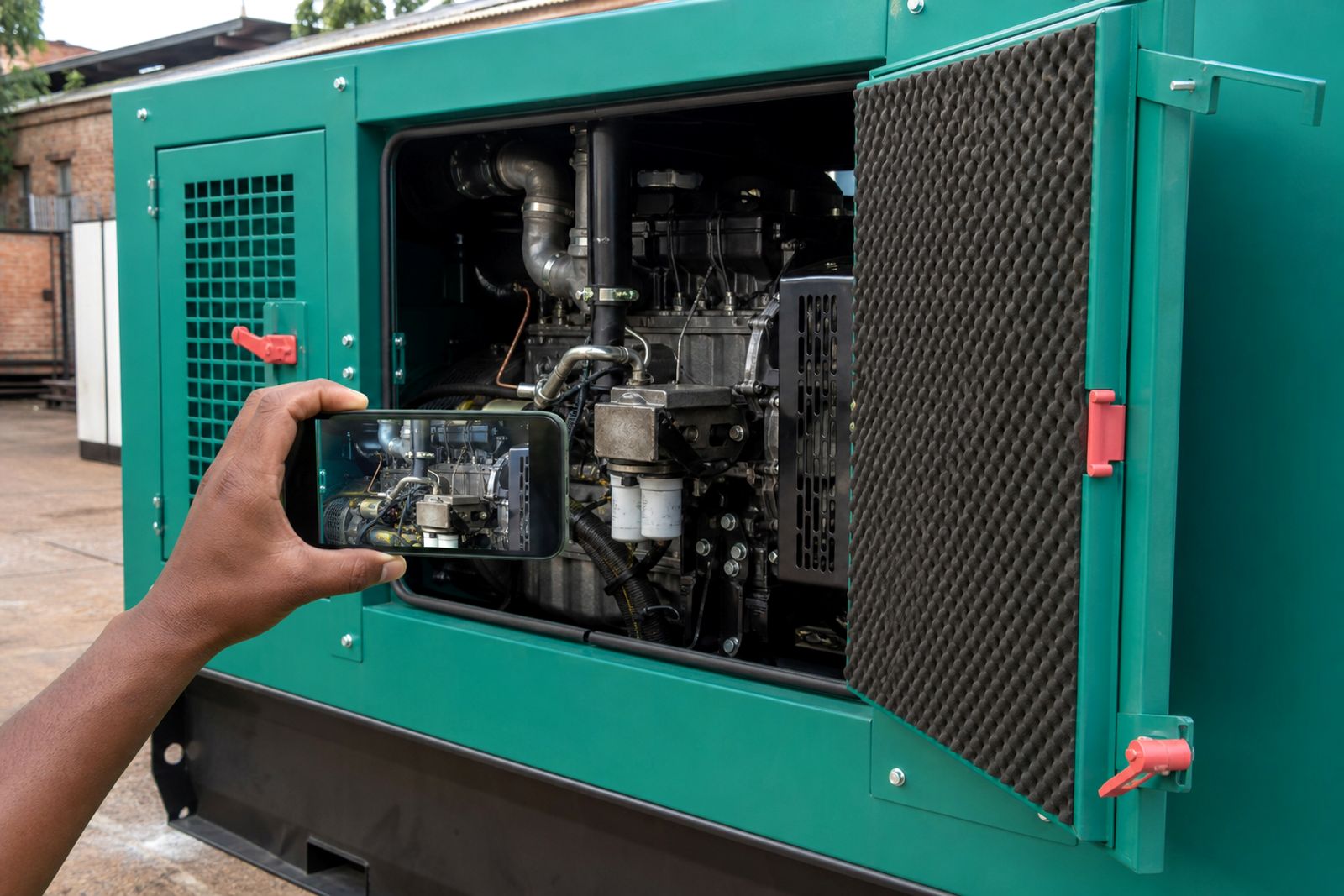
When you need spares, send the generator nameplate photo, engine plate, alternator plate, controller face, AVR label and a few clear pictures of the fitted part through our contact form. Include dimensions where possible, plug shape, mounting hole spacing and the number of wires. For filters, a photo of the old filter and the sealing face helps. For batteries, include the length, width, height, terminal layout and rating shown on the casing. Those details matter more than a rough machine description, and it avoids a lot of guessing.
Reliable Generators Parts in Wadeville supplies filters, AVRs, controllers, sensors, batteries, chargers, belts and service kits for generator owners across South Africa. We do not sell complete generators and we do not do electrical installation.
What our Generator Parts customers say
Verified Google reviews
Questions we get asked
How often should I service a generator that hardly runs?
A standby generator still needs routine attention even with low hours. Age, moisture, battery condition and stale fuel can cause faults long before normal wear parts are used up, so follow the calendar checks as well as the hour-based service points.
What photos help identify the correct spare part?
Send clear pictures of the generator nameplate, engine plate, alternator plate, controller front, AVR label and the part removed from the machine. Close shots of plugs, terminals, mounting holes and wire colours are often the difference between the right part and an almost-match.
Can I work on the changeover side myself?
Visual checks are fine, but wiring, changeover and ATS work must be done by a qualified electrician. That side of the system affects safe isolation and automatic starting, so it should not be treated as a casual repair.
Also worth a look
Tell us about the job
Send sizes, materials and where you are through our contact form, and we will come back with the practical options.
Open the contact form