
Who we supply
Different sites use generators in different ways, and the parts that matter most are not always the same. This section groups common applications so you can head straight to the pages that fit your standby set, portable unit or farm installation.
Start with the job the generator does
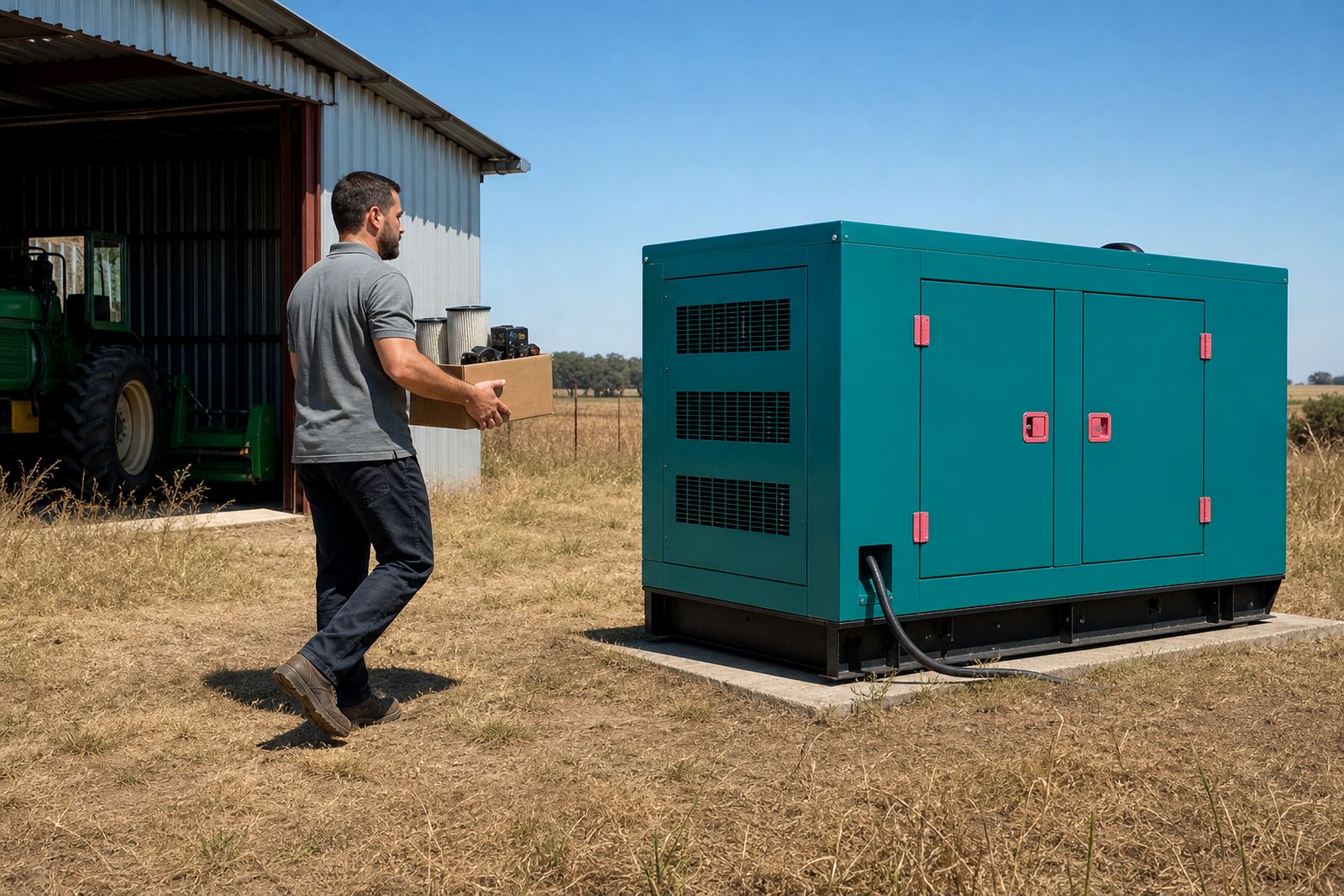
A small petrol unit at home, a diesel set on a borehole and a standby machine behind a workshop do not wear parts in the same pattern. That is why this section is arranged by application rather than by a single long product list. It helps you narrow the search before you look at filters, AVRs, controllers, batteries or service kits.
If you are not sure where your generator fits, think about how it is used on a normal month. Is it only there for power cuts, does it start automatically, does it run irrigation equipment, or does it spend long hours carrying a steady load? Those details usually point to the parts that need attention first.
Homes and small standby setups
Home users often need straightforward service parts and a clear way to identify them. Portable petrol generators and small standby sets typically need oil filters, fuel filters, air filters, starter batteries, chargers and replacement control items when a no-start fault appears. On residential sites the biggest problem is often ordering by appearance alone, then finding the mounting, plug or voltage rating is wrong.
- Nameplate details matter more than casing colour or frame shape.
- Photos of the old part, plug side and mounting side help a lot.
- Auto-start parts must match the way the set is already wired by the electrician.
- For water-cooled units, sender and temperature switch details should be checked carefully.
If your unit only runs during municipal outages, the right page in this section will point you toward standby-focused parts rather than farm or workshop items.
Farm, borehole and remote-site use
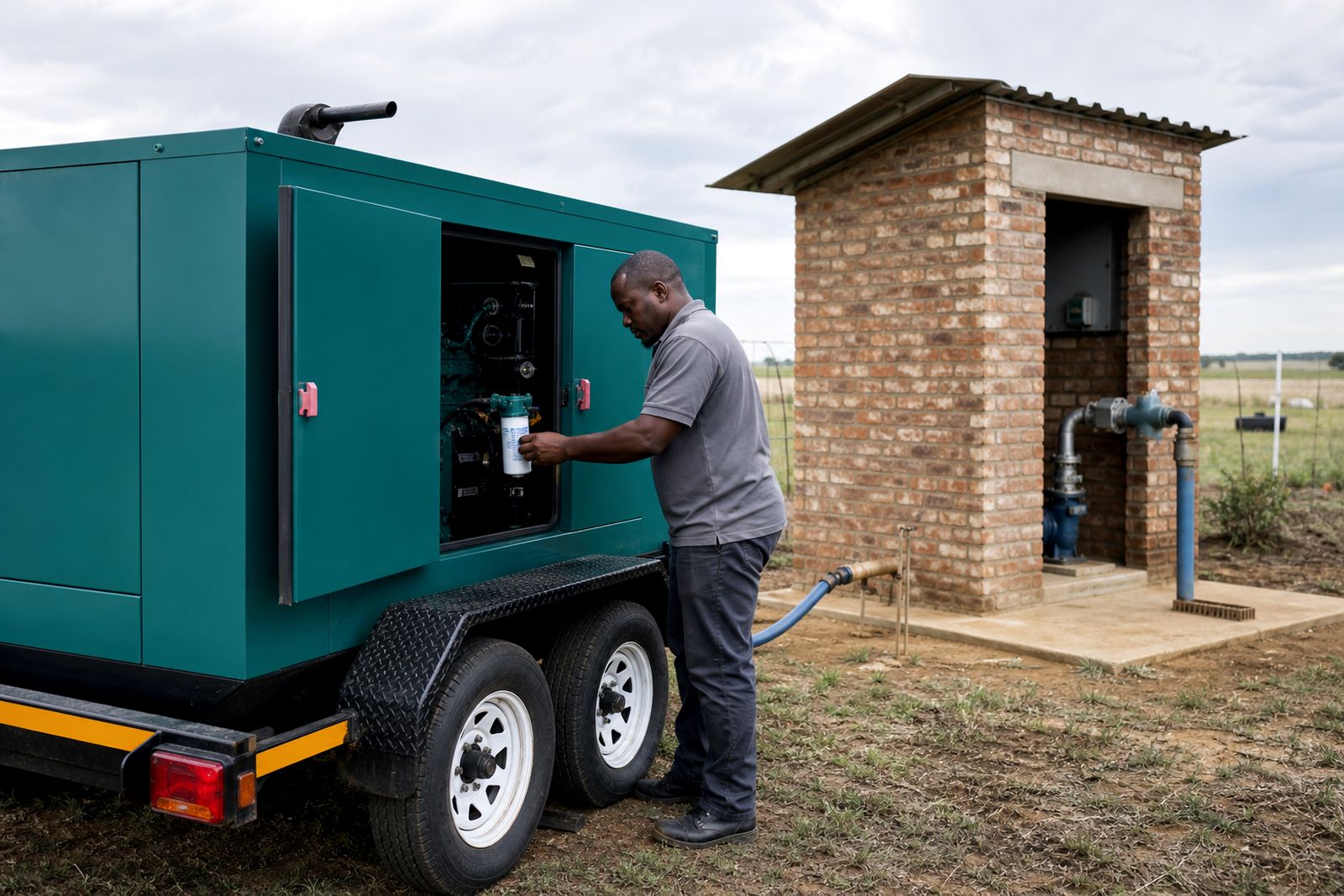
Farm generators usually work in tougher conditions than town standby sets. Dust, longer run hours, diesel storage, vibration and distance from town all affect which spares are worth keeping on hand. Air filtration becomes more important, water-separator elements can be critical, and control faults need to be traced with the actual application in mind rather than guessing.
Where a generator starts a pump or supports irrigation, the parts choice must suit that duty. A machine that stands for two weeks and then runs hard for several hours has a different service pattern from a lightly used domestic set. On remote properties a missed filter match can waste a whole trip, so clear photos and serial plate details are well worth sending through our contact form.
- Dusty sites usually place more demand on air filters and pre-separation.
- Diesel storage conditions often make fuel filtration and water separation more important.
- Long cable runs and pump starting can expose weak batteries and charging faults.
- Engine senders and shutdown inputs need the correct thread, range and function.
Workshops, light industrial sites and trade yards
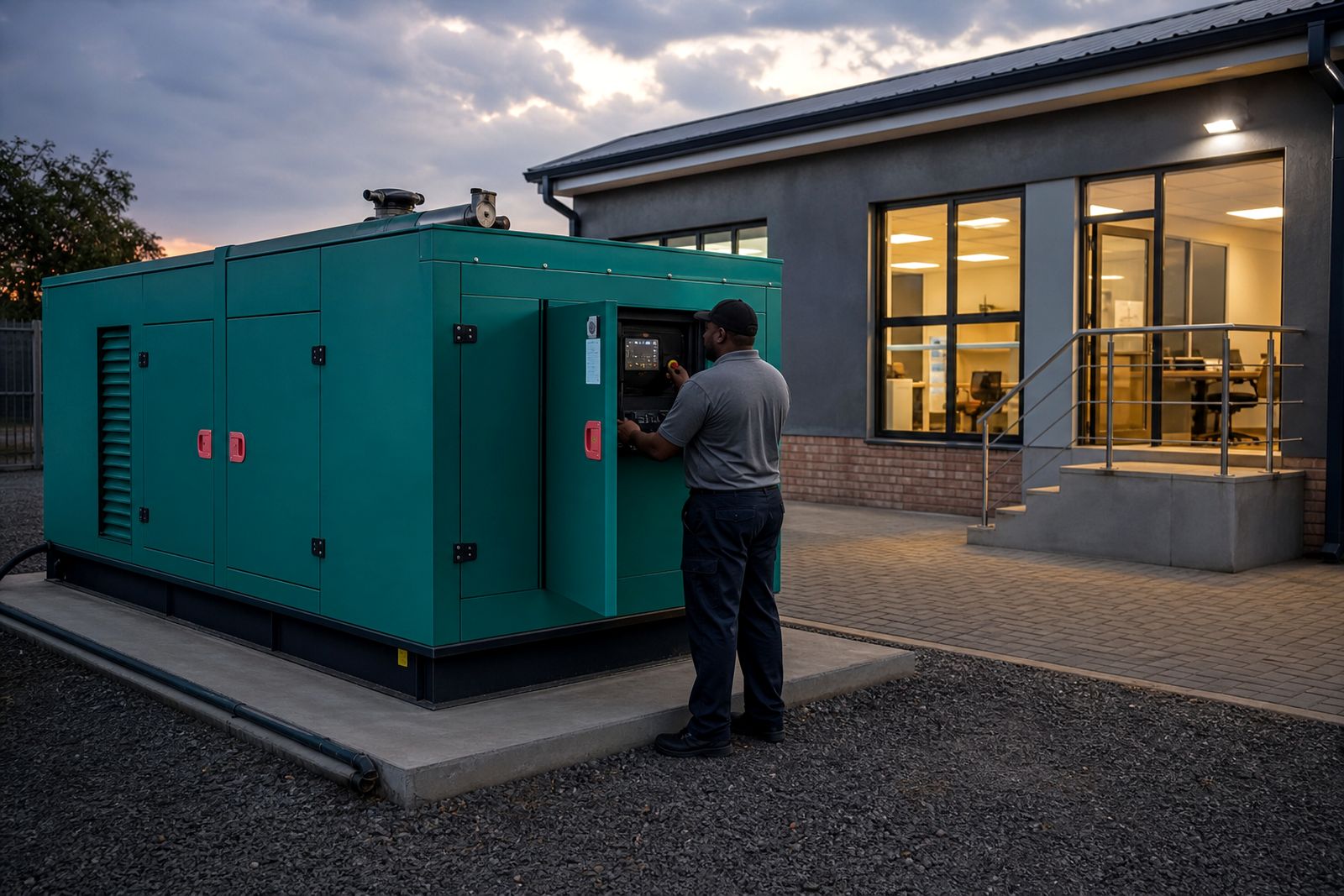
Workshop and yard generators are often judged by one thing: whether they start when the power drops and hold stable output while equipment is running. In these settings we are regularly asked for AVRs, control modules, changeover-related parts, service kits and charging components. The parts need to match the alternator and control arrangement already in place, not just the engine size.
These sites can also carry mixed fleets, with a small portable generator for odd jobs and a larger standby set for fixed loads. That makes record-keeping important. A photo of the old AVR, terminal markings, controller screen, loom plugs and the generator nameplate can save a lot of back and forth. Wiring and changeover work must still be done by a qualified electrician, but we can help identify the spare itself.
A practical way to compare applications
Before you open one of the application pages below, use this quick comparison to decide where you fit best.
- Home standby: shorter running hours, simpler controls, common focus on filters, batteries and basic no-start parts.
- Farm and borehole use: harsher dust conditions, fuel quality concerns, longer runs and more attention on air filtration, water separation and senders.
- Workshops and small business sites: stronger focus on AVR matching, controllers, auto-start modules and standby readiness.
- Remote sites: identification accuracy matters most, because replacing the wrong part wastes time and travel.
If your setup overlaps two groups, follow the one that matches the generator's main duty. For example, a farmhouse set used mainly for a borehole will usually fit the farm page better than the home standby page.
How to use the pages in this section
Each page under this section looks at a real operating environment and the parts commonly linked to it. That makes it easier to move from the application to the relevant product pages, whether you need filters, AVRs, controllers, sensors, service kits or battery charging parts. You do not need the full generator model to start, but the more detail you can share the better.
Useful details include the generator nameplate, engine plate, alternator plate, controller face, part numbers on the old item and a few clear photos. We courier generator spares from Wadeville to every province, for homes farms workshops and business sites where the right replacement part matters more than guesswork.
Explore the range
What our Generator Parts customers say
Verified Google reviews
Questions we get asked
Do you only help businesses, or can homeowners buy spares as well?
We help both individual customers and businesses. Home standby users, farms, workshops and larger sites all use this section to find the most relevant part categories.
Can you identify a generator part from photos?
Yes, photos of the nameplate, the old part, plug connections and mounting points are often enough to narrow it down. Clear pictures taken in good light are best.
Do you install changeover equipment or wire controllers?
No. We supply parts only, and electrical installation or changeover wiring must be done by a qualified electrician.
Tell us about the job
Send sizes, materials and where you are through our contact form, and we will come back with the practical options.
Open the contact form