
Standby generators for power cuts
A standby set that starts on the first outage usually got attention before the lights went out. For homes, farms and businesses across South Africa, small service parts often decide whether a generator runs cleanly or gives trouble under load.
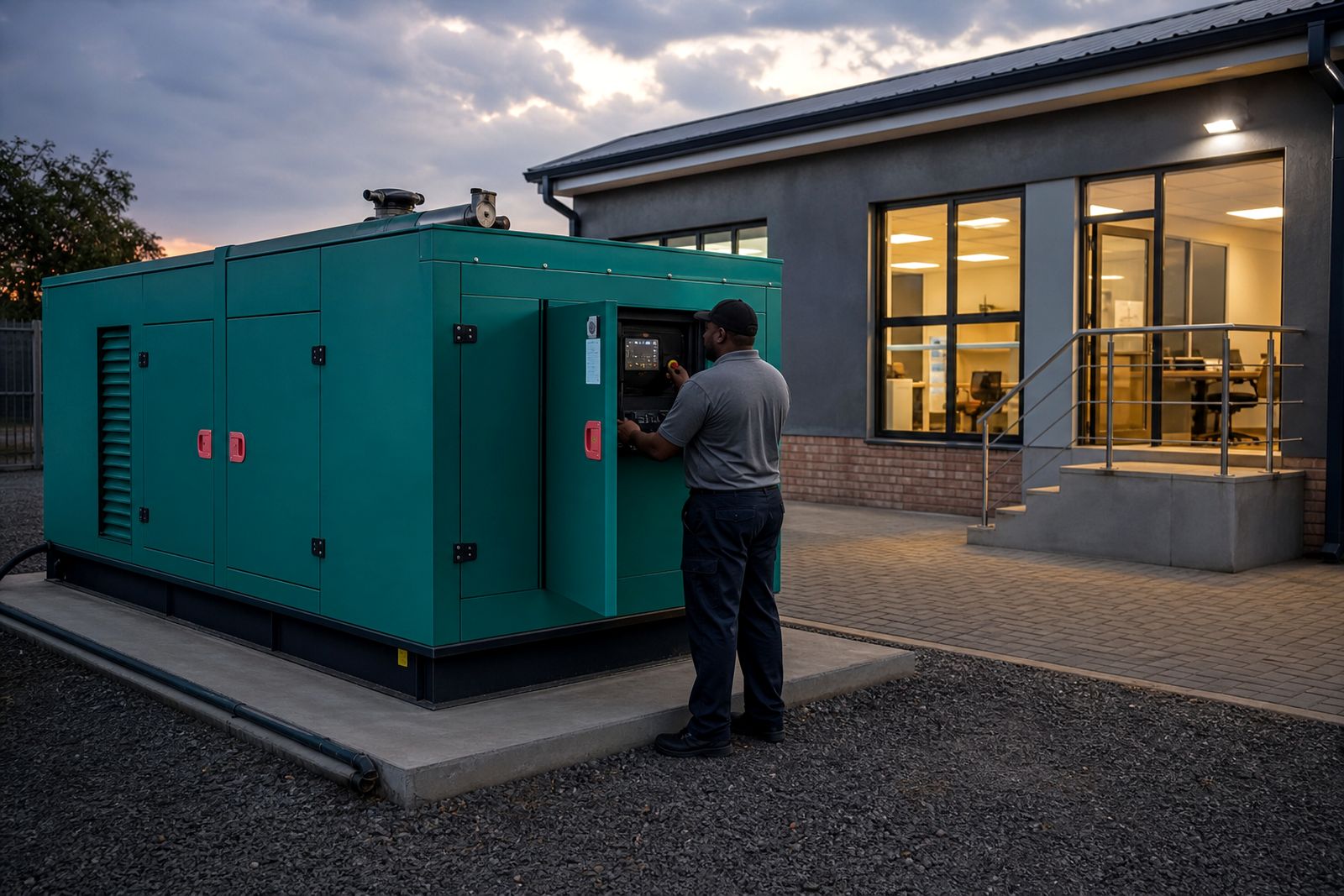
A standby set fails most often while it is waiting
Power-cut generators spend long periods parked, then are expected to carry fridges, gates, alarms, pumps or a workshop circuit at short notice. That pattern is hard on filters, batteries, chargers and control parts because age, moisture and light corrosion build up quietly even when the engine hours stay low.
In Wadeville we often see standby units that ran well during the previous outage season, then battled to start months later. The fault is not usually dramatic. It is more often a tired starter battery, stale fuel, a blocked filter, a loose sensor plug or an AVR issue that only shows when the alternator has to pick up load.
For a home or business set, readiness is less about major engine work and more about routine service items being correct and fitted on time. A clean running generator with stable voltage protects appliances far better than a neglected machine that hunts, smokes or drops output when the geyser or compressor cuts in.
The parts that deserve attention before the next outage
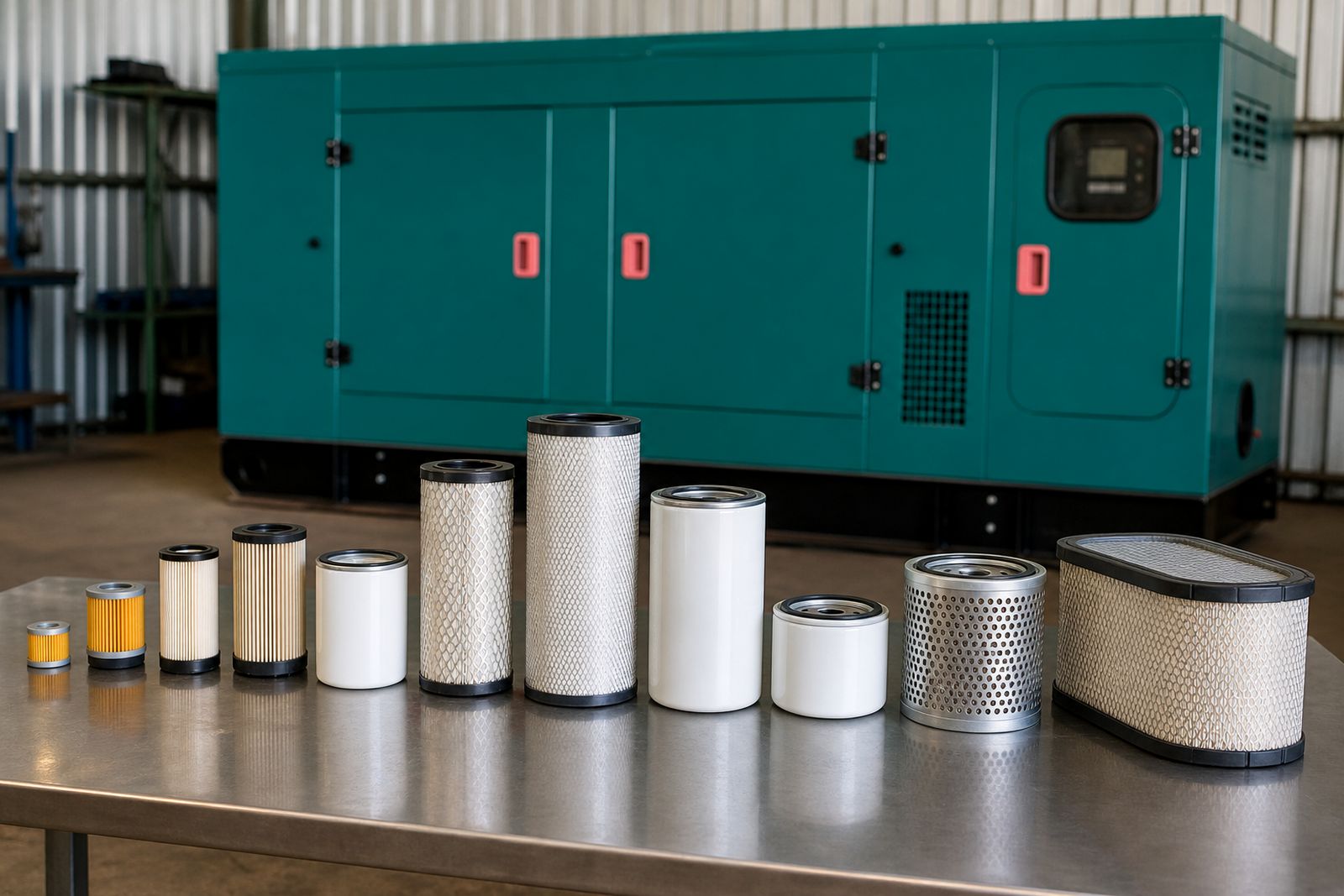
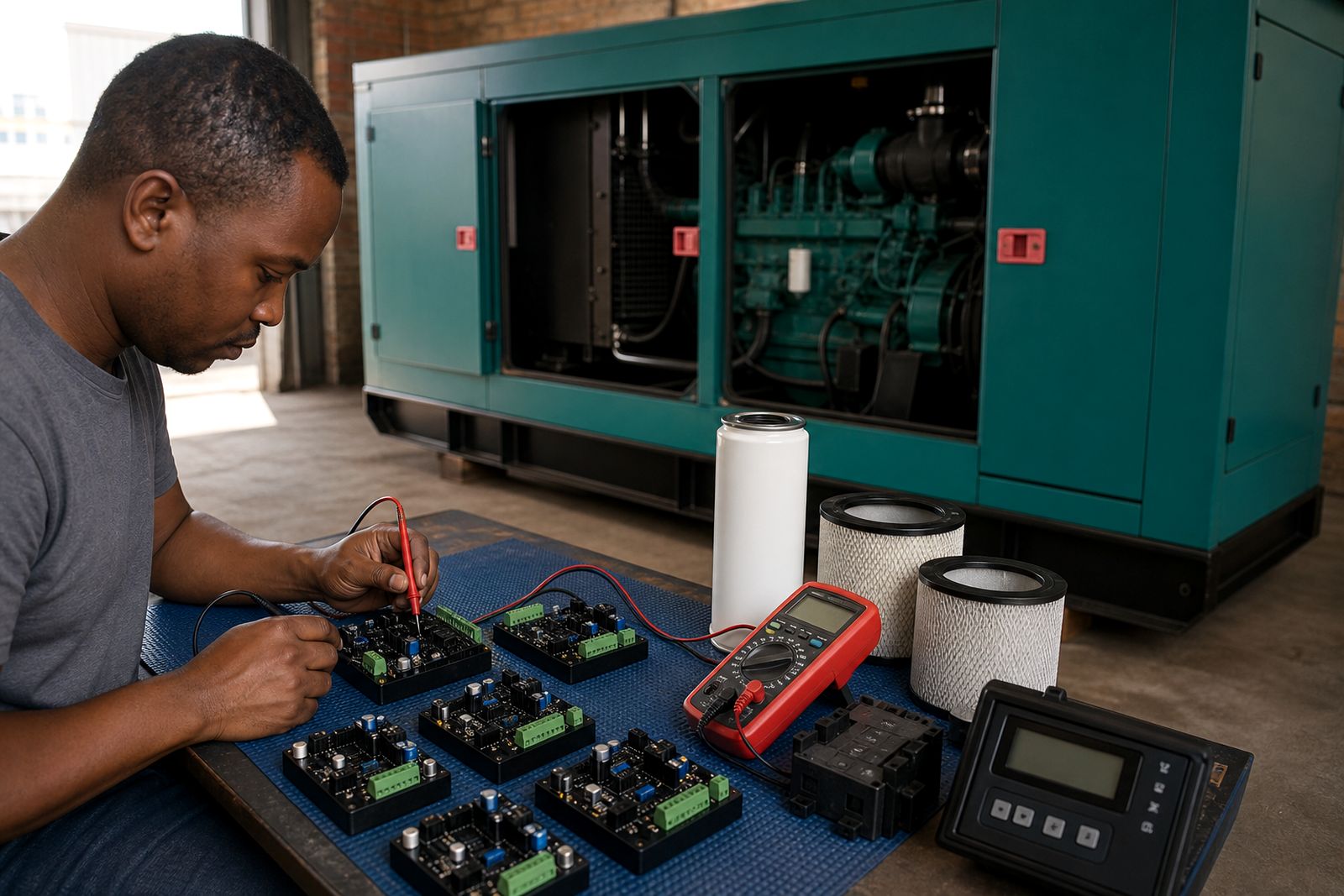
Most standby service calls come back to a short list of consumables and electrical parts. If these are checked properly, many avoidable starting and running problems are found early.
- Oil filters that keep lubrication clean during short start-stop cycles.
- Fuel filters that stop debris and water from reaching the injection or carburetion side.
- Air filters that protect the engine where dust from yards, workshops and roads is common.
- Water separators on diesel sets, especially where drums or farm tanks are used.
- Automatic voltage regulators that help hold output steady as load changes.
- Controllers, auto-start modules and sensors that manage shutdown alarms and remote start signals.
- Starter batteries and chargers that keep cranking power available during long idle periods.
- Belts and service kits for regular maintenance intervals.
These parts are needed on portable petrol machines as well as larger standby diesel sets. The scale changes, but the weak points are familiar. If the set is linked to an automatic changeover arrangement, the control side matters just as much as the engine side. Wiring and changeover work must be handled by a qualified electrician, but replacement control parts still need to match the existing setup exactly.
What a monthly standby check should include
A useful standby routine is brief enough that it actually gets done. One careful inspection each month catches most of the issues that turn up on the first dark evening after a long quiet spell.
- Check the battery terminals for corrosion and confirm the charger is operating.
- Inspect for fuel seepage, cracked hoses and any wet marks around filters or pumps.
- Look at the air filter condition and clean dust build-up around the intake area.
- Drain water from the separator bowl if the unit uses one.
- Start the generator and listen for uneven running, hunting or delayed oil pressure.
- Confirm charging voltage and basic output stability without opening live electrical panels.
- Run the set on a sensible test load where site rules allow it.
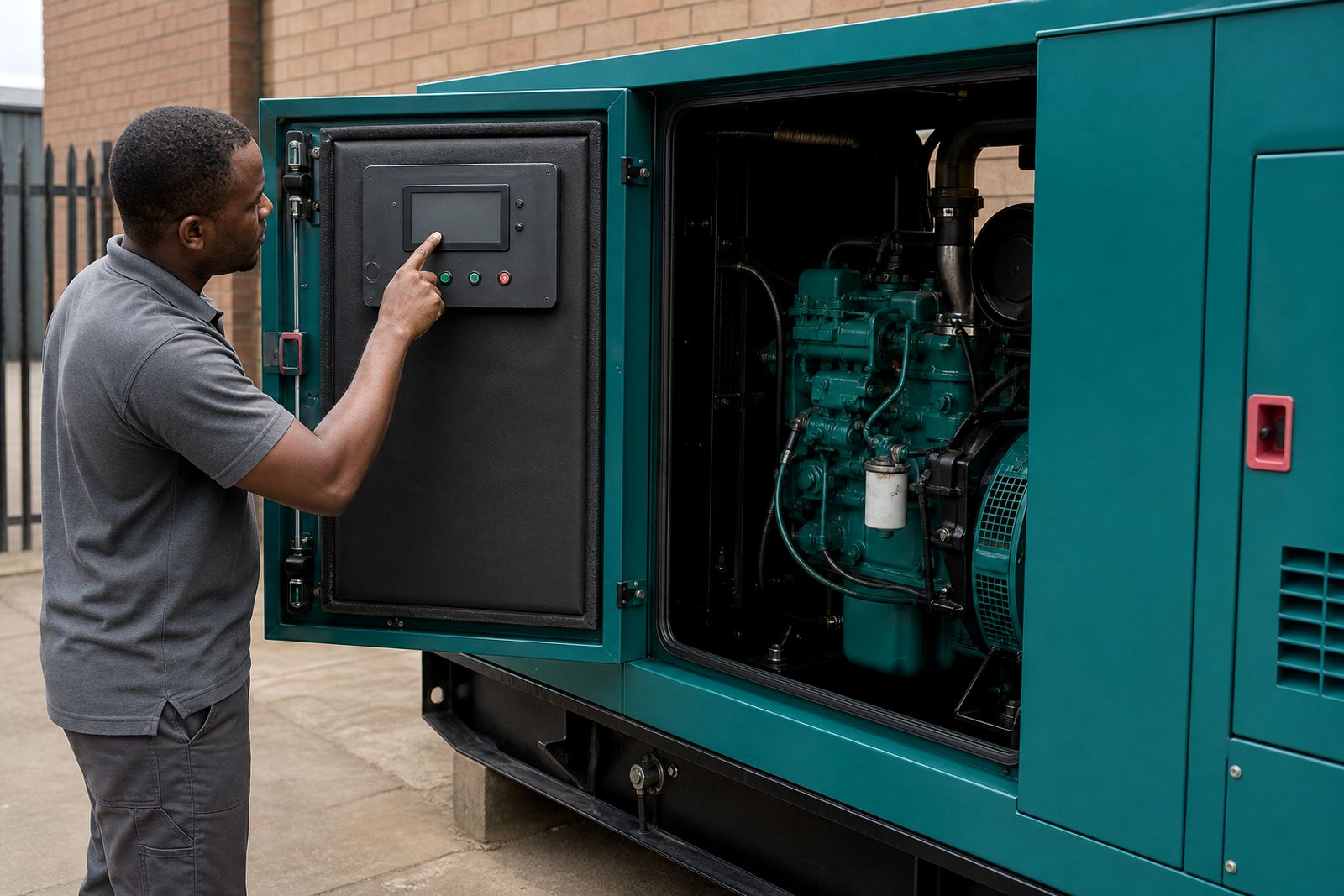
- Note any alarms, warning lamps or controller messages for follow-up.
Coastal humidity can be rough on terminals and plugs, while inland workshop dust quickly loads air filters. On small domestic units, old petrol and infrequent exercise runs are a common reason for hard starting. On standby diesels, water contamination and weak batteries are seen more often. Keep a record of what was changed and when, even if it is only a page in the generator file, because it saves guesswork later.
A Wadeville workshop example from a power-cut week
During a week of repeated outages, a small fabrication workshop in Wadeville had a standby diesel set that would crank well but trip out shortly after taking load. The engine service items looked overdue and the operator mentioned a recent low-voltage warning on the panel.
From the nameplate details and clear photos of the fitted parts, the likely service items were identified first: fuel filtration, an air filter and the correct battery-side consumables. The panel photos also showed the style of controller and the AVR layout. After the worn service parts were replaced and the electrician checked the changeover wiring on site, the set held output properly and the nuisance trip stopped.
The point is not that every low-voltage complaint needs the same parts. It is that a proper standby diagnosis starts with accurate identification. A controller, AVR and filter set can look similar across different machines, yet use different plugs, ratings, mounting holes or adjustment arrangements. Good photos and the full generator nameplate save a lot of wasted movement and the wrong parcel going out.
Getting the right spare the first time
Standby generators are often tucked into enclosures, plant rooms or outbuildings where part numbers are dirty, faded or half hidden. Sending the right details at the start makes identification much easier, and it reduces the chance of matching by guesswork.
- A photo of the generator nameplate with model and electrical data visible.
- Clear photos of the old part from more than one angle.
- Any numbers stamped on the filter, controller, AVR, sensor or charger.
- Whether the set is petrol or diesel, portable or fixed standby.
- A note on the fault: no start, low voltage, hunting, shutdown alarm or battery not charging.
- Your town and province for courier planning.
Reliable Generators Parts supplies spare parts rather than complete generators, and parts can be couriered to every province. Where customers are unsure what they are looking at, a close photo of plugs, terminals, mounting feet and wiring labels often tells more than a distant shot of the whole machine. If you need help identifying a standby part, send the generator details through our contact form.
Keep safety and changeover work in the right hands
A standby unit may look straightforward, but the moment it interacts with a building supply the job moves beyond basic engine maintenance. Incorrect changeover arrangements can back-feed circuits, damage equipment or create a serious shock hazard. For that reason, installation and wiring work must be done by a qualified electrician.
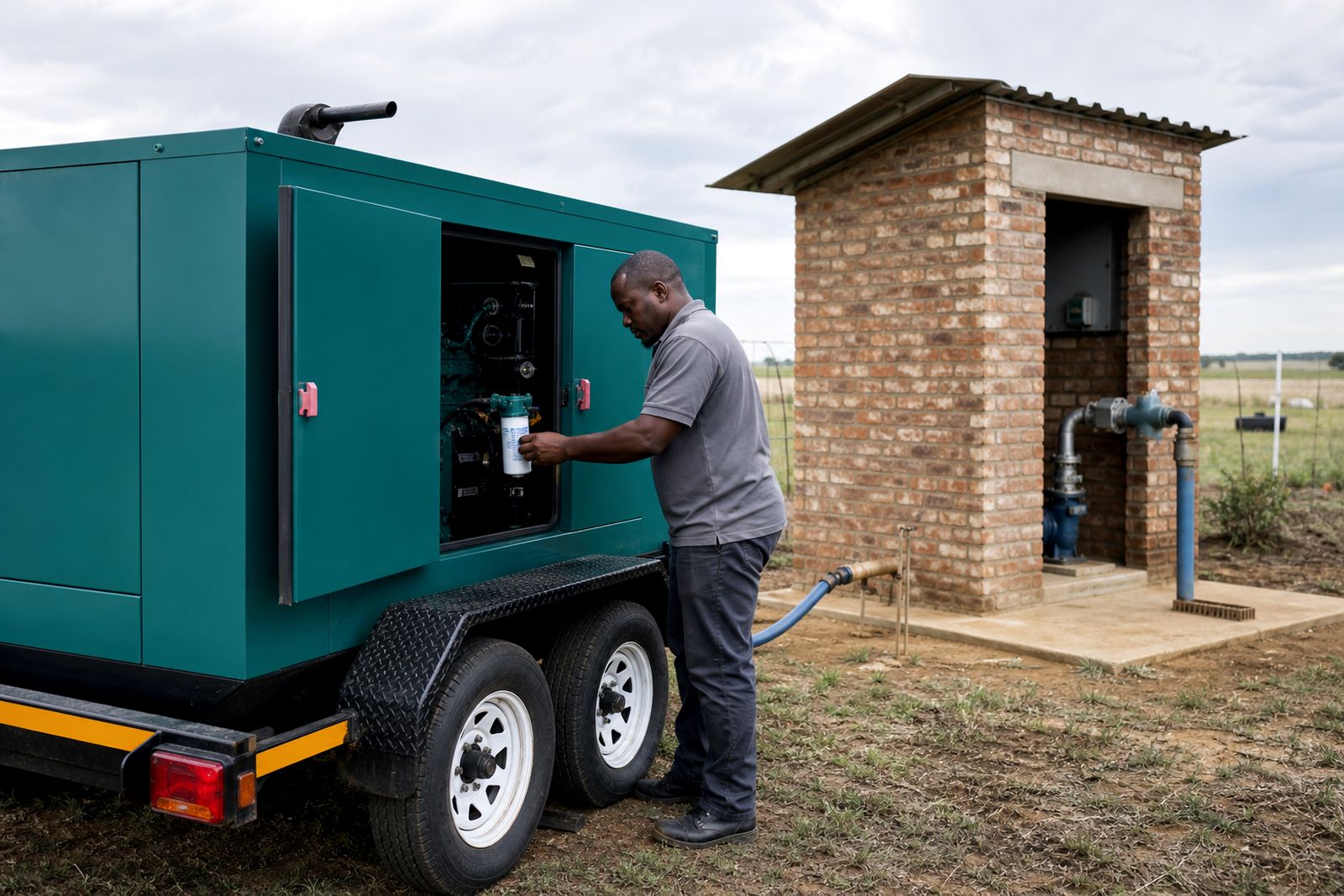
What owners and operators can do safely is keep the service side in order: clean filters, healthy batteries, dry fuel, readable controller alarms and correct replacement parts. That groundwork matters a lot. A standby generator that is exercised, serviced and fitted with the right spares is far more likely to carry the next outage without drama, and that makes life easier whether the set is outside a house, next to a borehole room or behind a small factory bay.
What our Generator Parts customers say
Verified Google reviews
Questions we get asked
Do you sell complete standby generators?
No. We supply generator spare parts such as filters, AVRs, controllers, batteries, chargers, sensors, belts and service kits for petrol and diesel sets.
Can you help identify a part for a load-shedding generator?
Yes. The best starting point is the generator nameplate plus clear photos of the fitted part, plugs, terminals and any visible numbers. Those details can be sent through our contact form.
Do you install changeover equipment or generator wiring?
No. Electrical installation, wiring and changeover work must be done by a qualified electrician. We can assist with identifying compatible spare parts for existing standby systems.
Also worth a look
Tell us about the job
Send sizes, materials and where you are through our contact form, and we will come back with the practical options.
Open the contact form