Farm and borehole generators
Farm and borehole generator sets work hard in dusty air, long run cycles and uneven maintenance conditions. The parts that fail are often small, but the effect on water supply, livestock areas and pack sheds can be serious.
Generators on farms fail differently
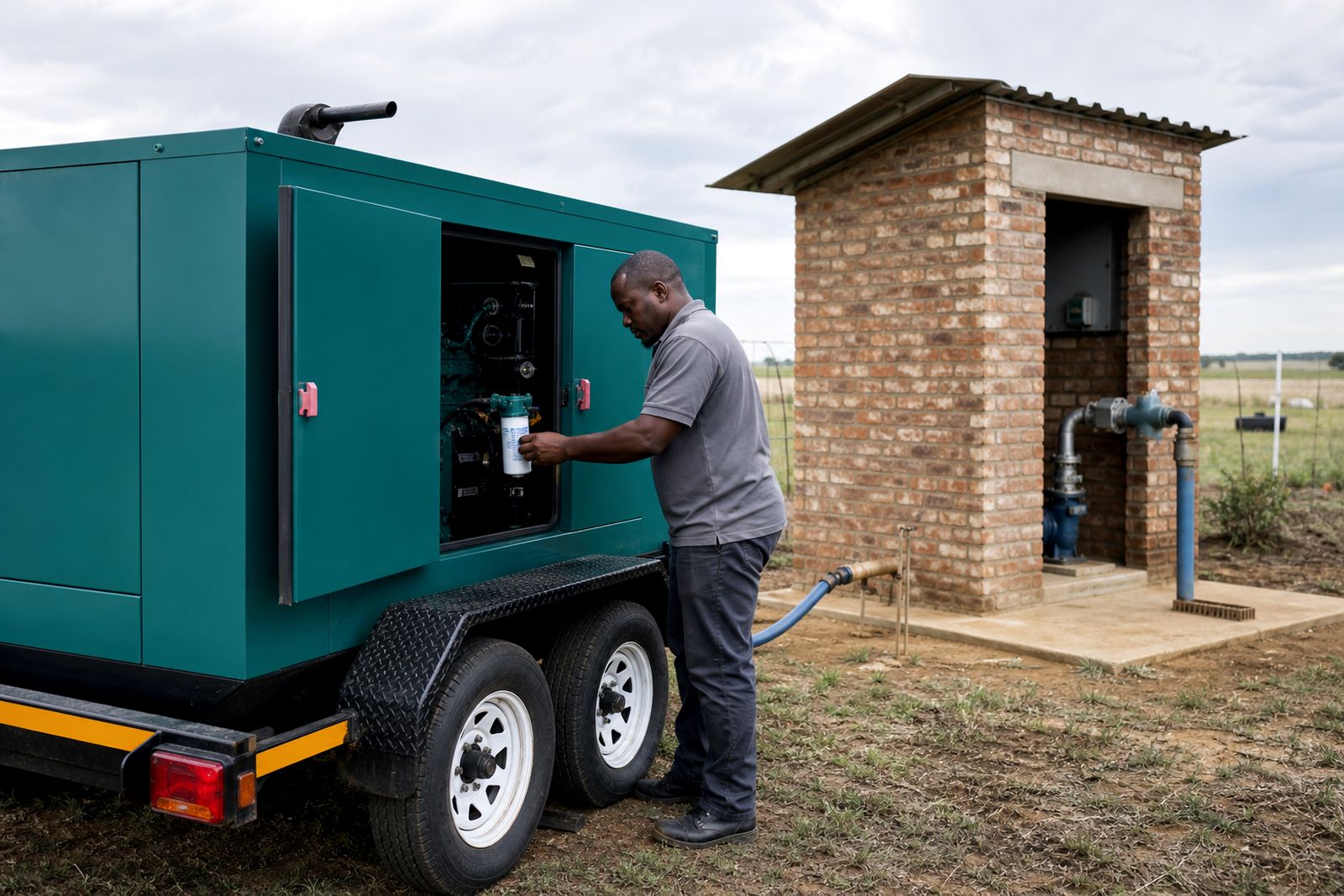
A generator that starts a house during a power cut does not live the same life as a unit feeding a borehole pump, pressure system or shed. Farm sets often run for longer stretches, sit near dust, chaff and damp ground, and may be asked to start motors with a heavy inrush current. That changes the wear pattern on filters, belts, charging parts and control items.
On many smallholdings and larger farms, the genset is expected to do several jobs through one week. It may run a borehole in the morning, a cold room or wash bay later, then stand outside a workshop while tools and lights are used. In those conditions, service items matter just as much as the larger electrical components. A blocked fuel filter, weak battery or tired sensor can stop a pump line as effectively as a major alternator fault.
- Dust loads air filters faster than on most town standby units.
- Diesel contamination and water in fuel bowls are common after storage.
- Pump motors can expose weak AVRs and controller settings.
- Battery charging faults show up after a set stands unused for periods.
- Outdoor mounting brings more moisture, insects and vibration into connectors.
The parts that usually matter first
For farm and borehole applications, the first parts to check are rarely exotic. They are usually the consumables and control items that keep starting, fuel flow and voltage stable. We help customers identify these parts from the generator nameplate, alternator plate and clear photos of the old component.
Most enquiries for this type of set involve one or more of the following:
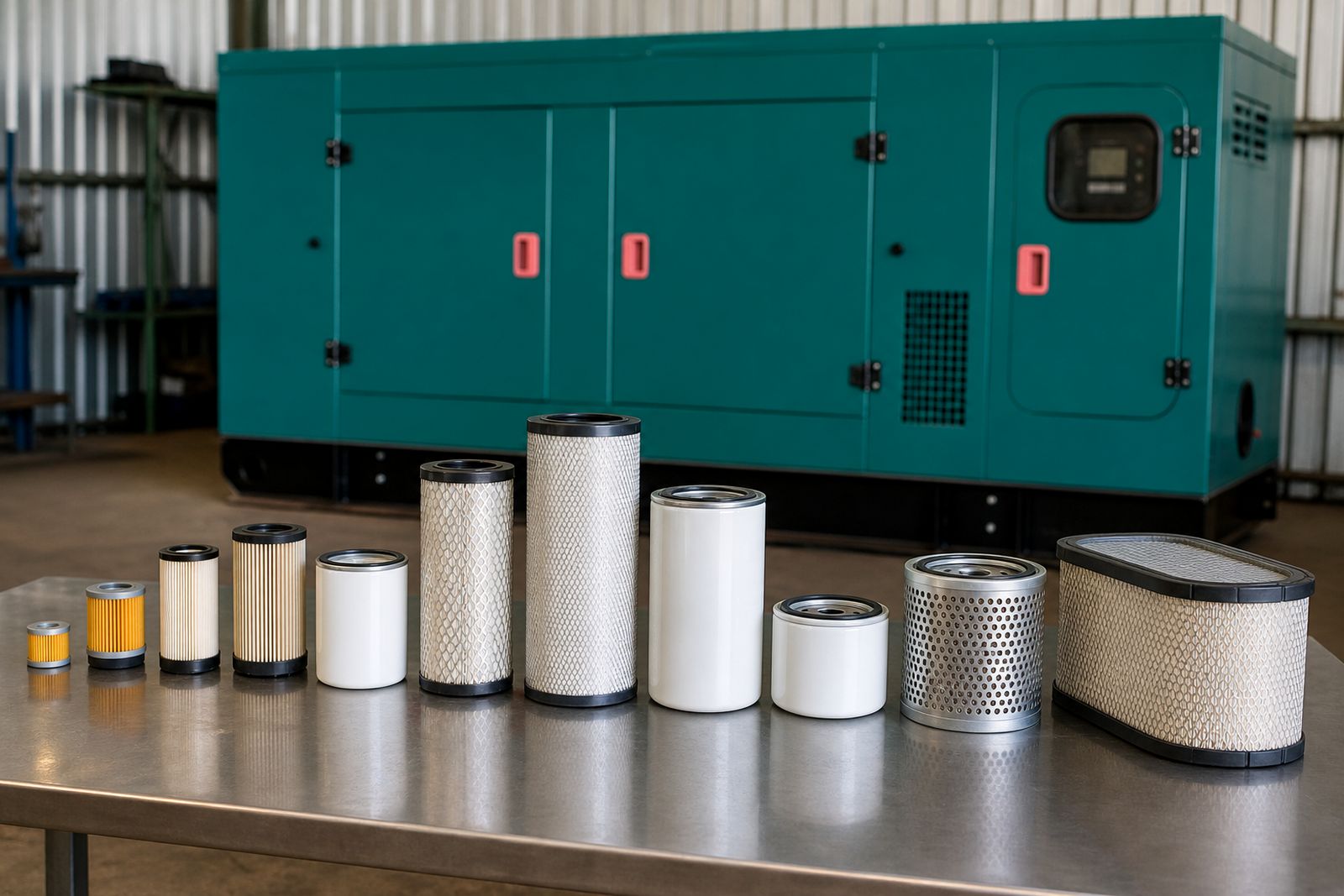
- Oil filters and fuel filters for routine servicing.
- Air filters where dust from lands, feed areas or gravel roads is heavy.
- Water-separator elements on diesel units with storage tanks.
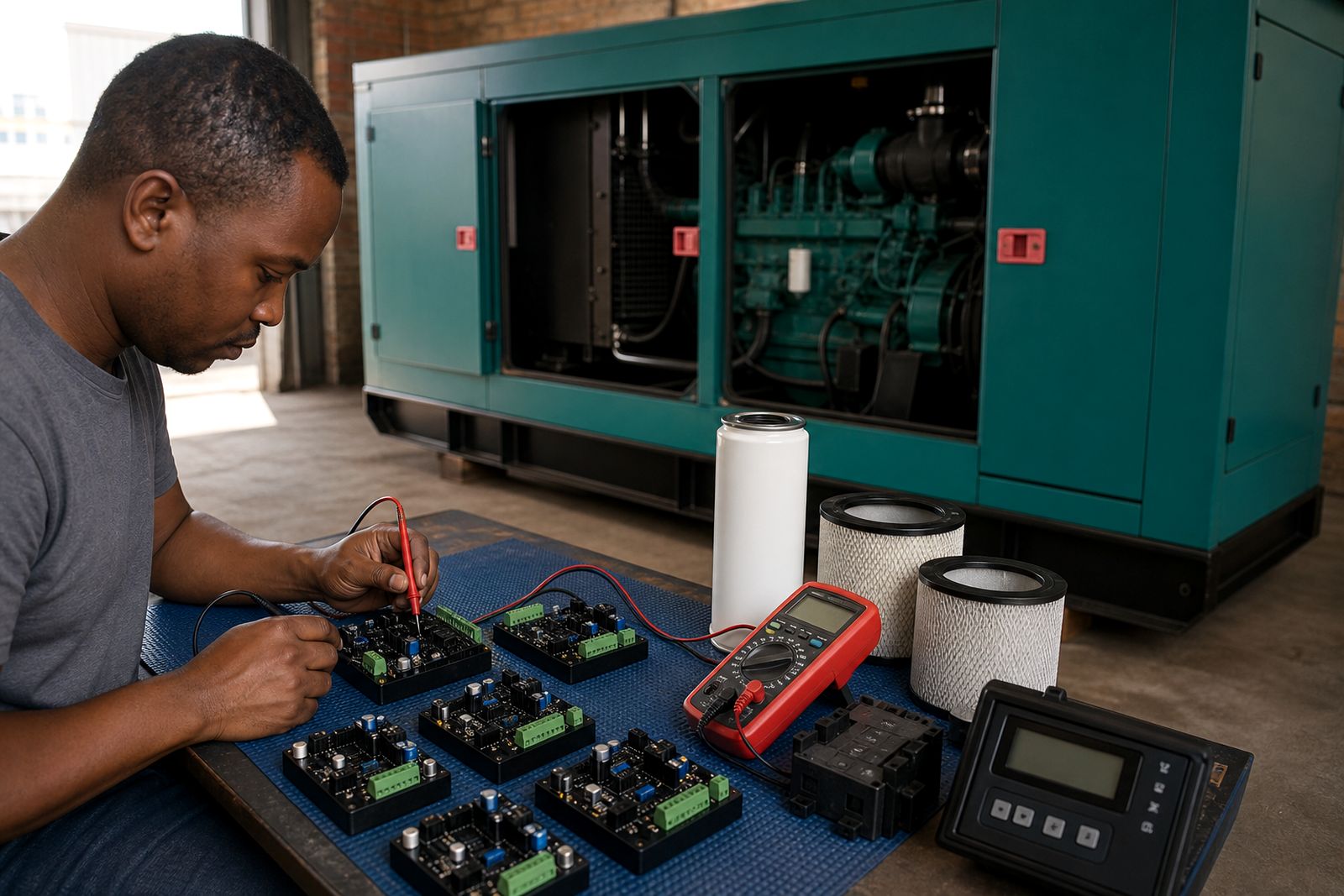
- Automatic voltage regulators on brushless alternators.
- Controllers, auto-start modules and changeover related parts.
- Sensors and senders for oil pressure, temperature and speed inputs.
- Starter batteries, chargers, belts and complete service kits.
Where a farm uses the generator for irrigation or a pressure pump, AVR condition becomes especially important. Voltage that drifts high or low can upset motor starting and trip protective devices. On electronically controlled sets, a faulty sender or poor battery charging circuit can also cause nuisance shutdowns that look like bigger engine trouble.
A Wadeville workshop example from a borehole set
One recent job involved a diesel standby unit used mainly for a borehole and a nearby shed. The complaint was simple enough: the engine started, then the pump would not stay online for long and the operator had seen unstable output on the panel. Photos sent through showed a dusty enclosure, an older regulator, and a fuel filter assembly with visible contamination in the bowl.
The first step was not to guess. The customer sent the generator nameplate, alternator plate and pictures of the controller, AVR and filter heads. That made it possible to match the regulator layout, check the controller inputs and identify the service items correctly. In this case the likely parts package included fuel filtration, an air filter, a regulator and a belt set. There was also a battery charging issue in teh background, which explained the weak cranking after the unit stood for a few days.
This is typical of farm sets. One failure hides another. A machine can still start, but dirty fuel, low charge rate and unstable excitation can combine under pump load. Replacing the wrong item first wastes time and courier cost, so clear identification matters.
What to photograph before asking for spares
Good photos save a lot of avoidable mismatch, especially where a generator has had previous repairs or a controller upgrade. On farms, model markings are often covered in dust or paint, so wipe plates clean and take the picture square on rather than at an angle.
- The full generator nameplate.
- The alternator plate if it is separate from the engine data.
- The front and back of the AVR, with wire positions visible.
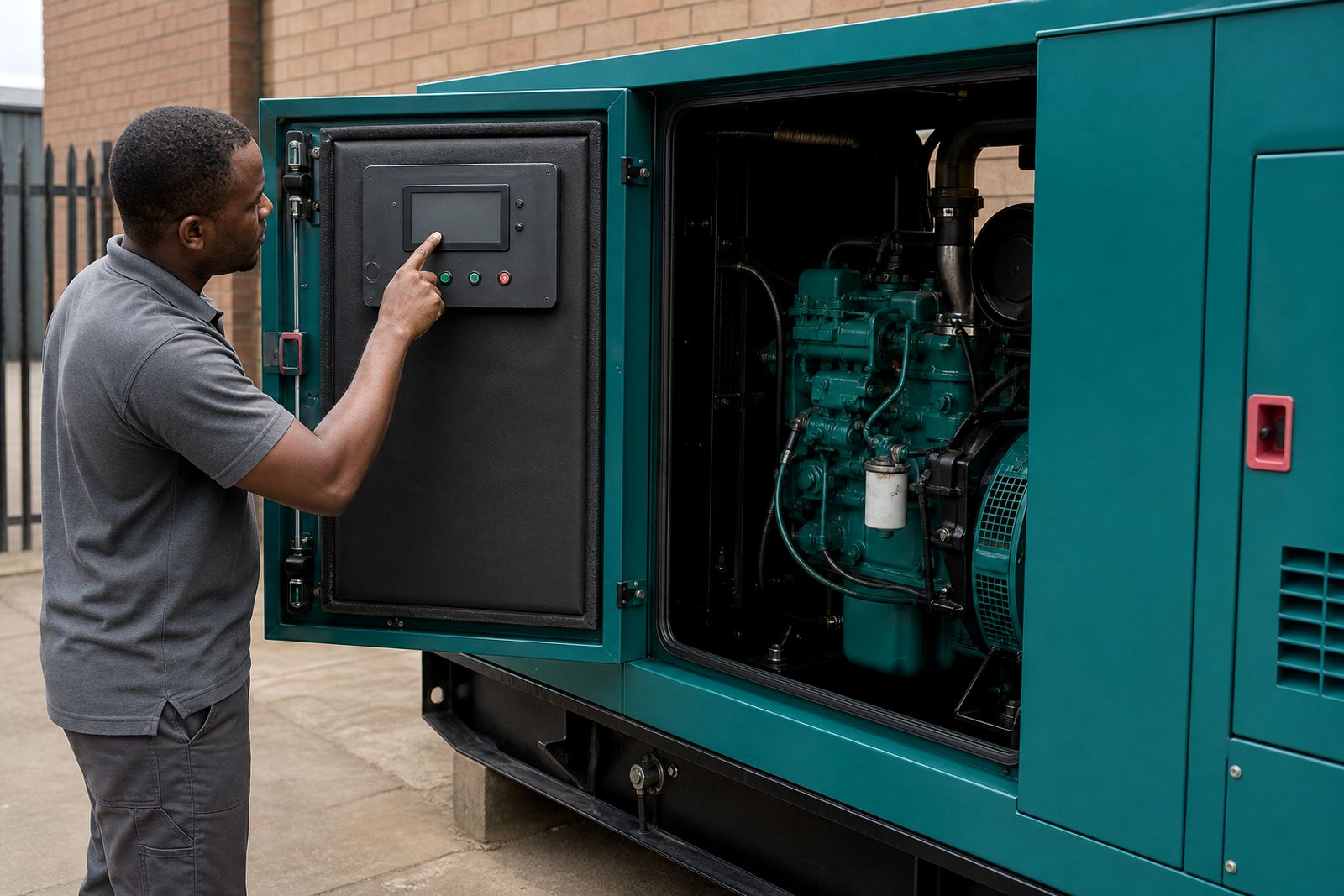
- The controller face and terminal area where practical.
- Filter numbers stamped on the old element or canister.
- Battery label details, tray size and terminal layout.
- Any sensor or sender removed from the engine block.
If the set drives a borehole pump, include the pump motor details if available. Voltage and frequency matter, and so does whether the generator is single phase or three phase. A close photo of the changeover arrangement can help with parts identification too, but any wiring work must be done by a qualified electrician. We do not do electrical installation and we do not sell complete generators.
Service intervals on farms are about conditions, not only hours
Hour meter readings are useful, but they are not the whole story on an agricultural site. A generator near lands, livestock feed, pack areas or unsealed roads breathes dirt all day. A unit standing through winter mornings or summer storms can also collect moisture in places a factory floor set never sees.
That is why filters and inspections should follow the actual environment. A machine used for a borehole after long standing periods may need fuel system checks before it needs major parts. Another set running a workshop and pump on the same day may show belt wear and charger trouble sooner than expected. If a diesel unit uses stored fuel, water-separator servicing becomes more important than many operators realise, and missed maintenance here causes rough running that gets blamed on the controller.
For many farms, keeping a small shelf of matched service items is worthwhile: oil and fuel filters, an air filter, belts, the correct battery size, and known sensors. It keeps routine servicing practical when the nearest town is not close and the pump cannot wait for a long diagnosis.
Getting the right part to the right farm
From Wadeville in Germiston, we assist customers across South Africa with generator spares for homes, farms, workshops and businesses. For farm and borehole sets, the useful starting point is usually the data plate and a few honest photos rather than a guessed part number. A controller that looks similar may use different terminals, and an AVR with the wrong sensing range can cause fresh trouble.
We can help identify filters, AVRs, controllers, auto-start modules, batteries, chargers, sensors, belts and service kits for petrol and diesel generators, from smaller portable units to larger standby sets. If you need help matching a part, send the generator and component photos through our contact form with a short note on what the set is powering and what fault you are seeing. That gives a better base for borehole and farm spares than a rough verbal description does.
Where the work involves changeover gear or wiring to pumps and sheds, use a qualified electrician on site. The spare part is only one side of the job, and safe installation still matters even when the fault seems minor.
What our Generator Parts customers say
Verified Google reviews
Questions we get asked
Can you help identify a borehole generator part from photos?
Yes. Clear photos of the generator nameplate, alternator plate and the old part usually help narrow the match for filters, AVRs, controllers, sensors and other service items.
Do you sell complete generators for farms?
No. We supply generator spare parts only, including filters, regulators, controllers, batteries, chargers, belts and service kits.
Do you do wiring or changeover installation on farms?
No. Electrical installation, wiring and changeover work must be done by a qualified electrician. We can assist with parts identification for relevant components.
Also worth a look
Tell us about the job
Send sizes, materials and where you are through our contact form, and we will come back with the practical options.
Open the contact form